The Best Noise-Cancelling Headphones Under $200, and Which One Fits You
Four pairs that SoundGuys measured, from $80 to $200, matched to what you actually need. The picks are grouped by use and listed by price, not ranked.
Under $200 you can now buy headphones that block a train engine, last a week between charges and support a high-bitrate codec. What has not gotten easier is choosing, because the differences that matter are not on the box. This guide covers four pairs that SoundGuys measured in its list of the best headphones under $200, last updated on March 11, 2026, and it says plainly where other reviewers disagree. We did not test these ourselves; every measurement below is credited to whoever took it. The pairs are listed from cheapest to most expensive, and that order is not a ranking. Prices are the ones SoundGuys listed in March and move constantly, so check before you buy.
First, how to read the noise-cancelling numbers, because they are the most misunderstood. SoundGuys reports attenuation in decibels at particular frequencies. Noise cancelling works best on steady low-pitched sound: engine hum, air conditioning, the drone of a flight. As a rule of thumb, a reduction of 10 dB is heard as roughly half as loud, so the gap between a pair that cuts 10 to 20 dB and one that cuts more than 25 dB is the gap between a quieter commute and one where the hum nearly disappears. Nothing at this price silences a crying baby or a nearby conversation, because those sit at higher frequencies where ANC is weakest.
If you want the most battery for the least money, the JLab JBuds Lux ANC is the pick at $80. SoundGuys lists a 44-hour battery, USB-C audio, a companion app with a 10-band equalizer, and fast charging that gives 4 hours of playback from a 10-minute charge. The trade-off is the noise cancelling itself: SoundGuys measured 10 to 20 dB of cancellation under 700 Hz, the weakest of the four. That is enough to take the edge off a bus or an open office, and not enough to feel like a different room on a plane. If you mostly want calm at a low price, this is the one.
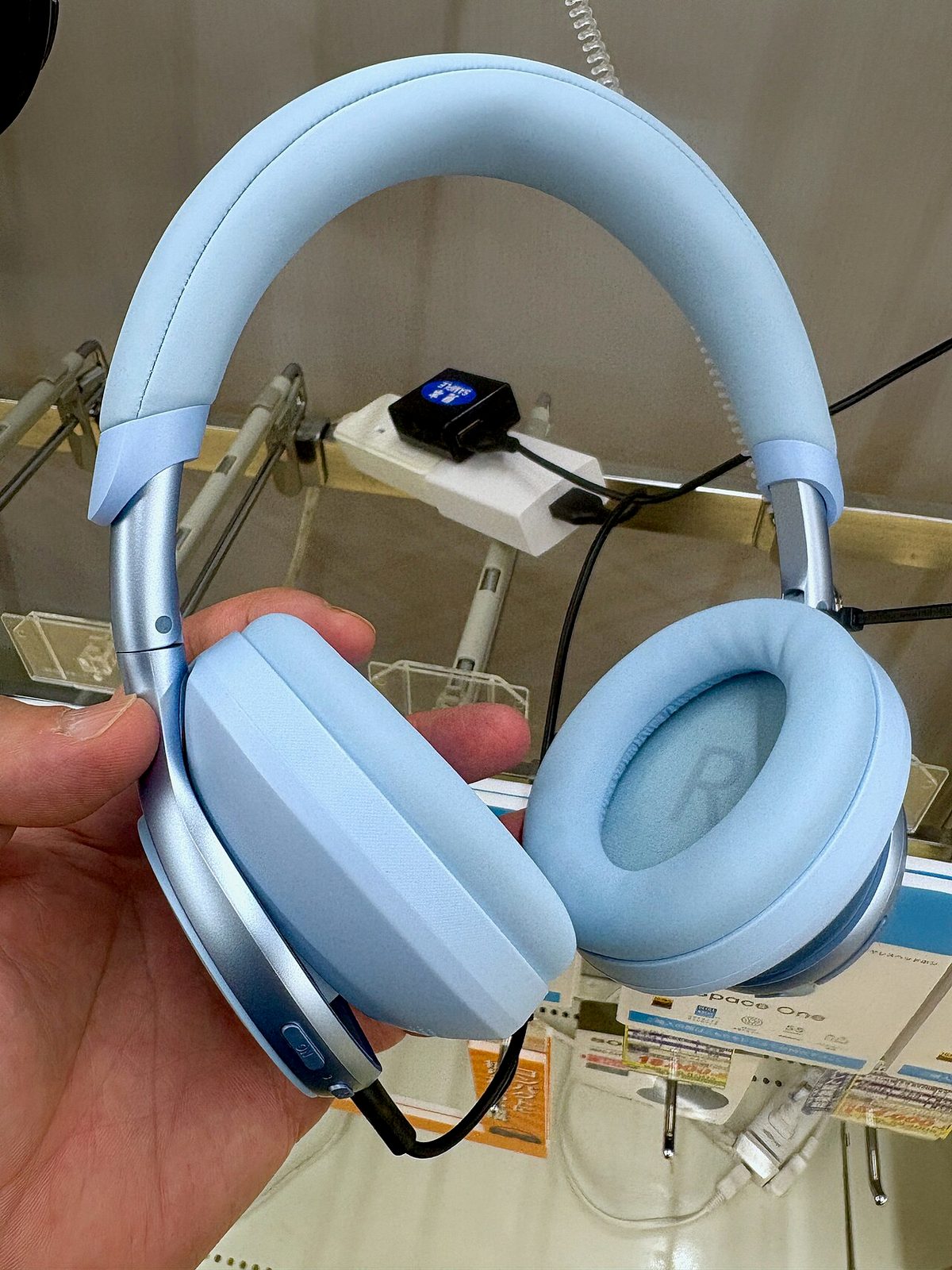
For Android owners, the Soundcore Space One at $100 is the sensible choice. It supports the LDAC codec, so a compatible phone can stream at a higher bitrate than standard Bluetooth allows, and it has HearID sound personalization, an 8-band equalizer, adjustable noise cancelling, wind-noise reduction, a 3.5 mm input and USB-C charging. SoundGuys measured 42 hours 57 minutes of battery with noise cancelling on. The LDAC advantage is real only if your phone and your music source support it; on an iPhone, which does not use LDAC, you would be paying for a feature you cannot use.
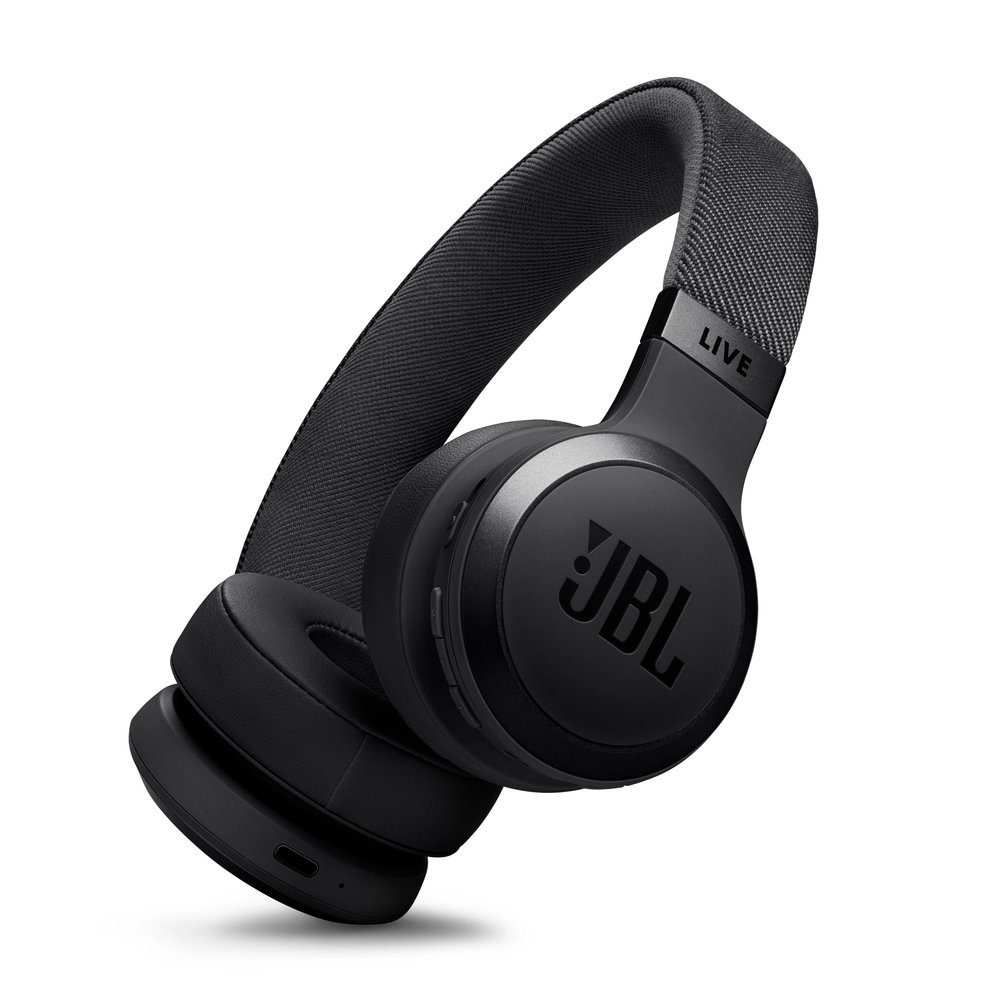
The JBL Live 670NC at $130 is SoundGuys' pick for sound quality, and the reviewers do not all agree about its noise cancelling. SoundGuys scored it 4.8 on its MDAQS sound-quality model, measured noise cancelling that approaches 30 dB around 250 Hz, and logged 54 hours 57 minutes of battery, above what JBL advertises. It has Bluetooth 5.3, a companion app with equalizer options and a 3.5 mm cable in the box, but it supports only SBC and AAC, so there is no LDAC. Tom's Guide, by contrast, headlined its review as rich sound and 65-hour playback but weak noise cancelling. A measurement at one frequency does not tell you how everyday noise, which spans many frequencies, will sound to you. Retail listings describe it as an on-ear design rather than over-ear, which some people find less comfortable over long sessions.
The most complete all-rounder is the Sony ULT WEAR at $200, SoundGuys' best overall pick. It measured more than 25 dB of attenuation above 80 Hz, the strongest low-frequency result in this group, and 32 hours 35 minutes of battery. It supports LDAC over Bluetooth 5.2, has multipoint so it can stay connected to a phone and a laptop, an equalizer in its app, and a wired 3.5 mm option. SoundGuys describes it as a compact, foldable over-ear pair.
SoundGuys also names a handful of alternatives worth a look at other prices: the EarFun Wave Pro at $80, with a 52-hour battery, LDAC and multipoint; the Sennheiser Accentum Wireless at $180, with a 46-hour test runtime and aptX and aptX HD codecs; the Sony WH-CH730N at $180; and the Nothing Headphone (a) at $199. We list them without further comment because SoundGuys' published notes on them are thinner than on the four pairs above.
Which should you buy? If you have never owned noise-cancelling headphones and want the cheapest way to try them, the JLab. If you use an Android phone and want a long battery and a codec you can actually use, the Soundcore. If sound quality matters most and you are fine with an on-ear fit and a codec limited to SBC and AAC, the JBL. If you want the strongest noise reduction of the four, multipoint and the most comfortable over-ear fit for the money, the Sony. None of these replace a $350 flagship on noise cancelling, and each does the specific job it was picked for.
One caution about lists like this one: they age quickly. New models arrive every few months and old ones are discounted or discontinued. Treat the picks as a snapshot from March 2026, and before you buy, look at the current price and whether a newer generation has replaced the pair you like.
| Specs | JLab JBuds Lux ANC | Soundcore Space One | JBL Live 670NC | Sony ULT WEAR |
|---|---|---|---|---|
| Price listed by SoundGuys (March 2026) | $80 | $100 | $130 | $200 |
| Battery (SoundGuys) | 44 hours listed | 42 h 57 min, ANC on | 54 h 57 min | 32 h 35 min |
| Noise cancelling (SoundGuys) | 10-20 dB under 700 Hz | Adjustable ANC, wind reduction | Approaches 30 dB around 250 Hz | More than 25 dB above 80 Hz |
| Codecs | Not specified by SoundGuys | LDAC | SBC, AAC | LDAC |
| Bluetooth | 5.3 | 5.3 | 5.3 | 5.2 |
| Equalizer | 10-band, app | 8-band, HearID, app | In app | In app |
| Multipoint | Not specified | Not specified | Not specified by SoundGuys | Yes |
| Wired option | USB-C audio | 3.5 mm | 3.5 mm cable included | 3.5 mm |