Galaxy S26 vs S26 FE: Which Should You Buy in 2026? A $300 Gap Buys a Smaller, Brighter, Faster Phone, and the Cheaper One Charges Quicker
Samsung's October price increase widened the gap between its smallest flagship and its Fan Edition. GSMArena's lab numbers show where the money goes, and two places where the cheaper phone is ahead.
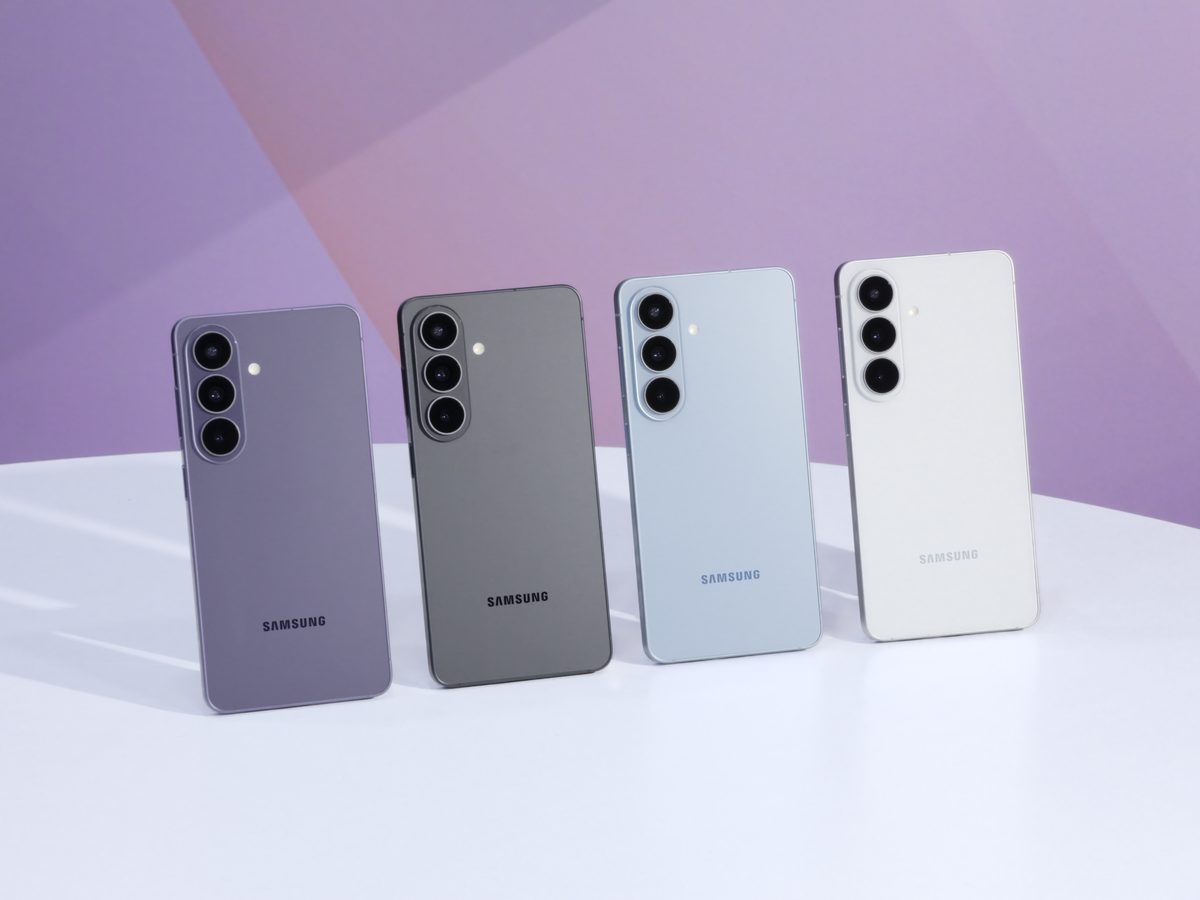
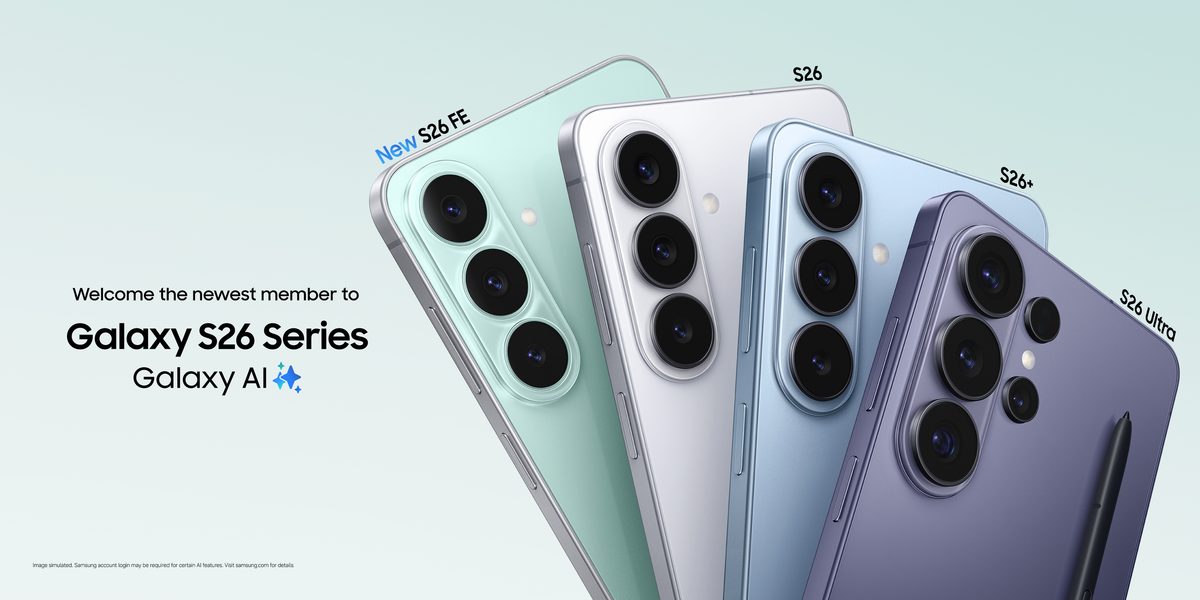
Until the end of September these two phones were $200 apart. On October 1, 2026, Samsung raised the Galaxy S26 to $999.99 and left the Galaxy S26 FE at $699, so the choice between them is now a $300 question. Both are sold in the US, both get seven generations of Android upgrades, and both carry the S26 name, which makes them the two phones a Samsung buyer on a budget of under $1,000 is most likely to weigh against each other. All prices here are Samsung's US list prices as of October 3, 2026, and all measurements are GSMArena's, from its reviews of the two phones.
The headline gap overstates the difference slightly, and it is worth getting that straight before anything else. The $699 S26 FE has 128 GB of storage. The S26 starts at 256 GB. An S26 FE with 256 GB is $799, so at equal storage the real difference is $200. If 128 GB is enough for you, the FE saves you $300; if it is not, it saves you $200. That is the number to hold against everything below.
Size is the difference you will notice first and live with longest. The S26 has a 6.3-inch screen in a body 5.89 inches tall and 2.82 inches wide (149.6 by 71.7 mm) that weighs 167 grams, about 5.9 ounces. The S26 FE has a 6.7-inch screen, stands 6.36 inches tall and 3.03 inches wide, and weighs 193 grams, about 6.8 ounces. In practice the S26 is one of the few current phones most people can use with one hand, and the FE is not. The reverse is also true: the FE gives you a noticeably bigger picture for video, maps and reading, for less money. Nobody should buy the smaller, more expensive phone hoping to get used to it, or the larger one hoping it will feel compact.
Both screens have the same 1080 by 2340 resolution and refresh at up to 120 Hz, so the smaller S26 panel is slightly sharper (411 pixels per inch against 385), a difference few people can see. Brightness is where they separate. With automatic brightness on, GSMArena measured the S26 at 1,383 nits with most of the screen lit and 2,552 nits in a small bright patch. The S26 FE reached 1,268 and 1,850 nits in the same tests. The first pair of numbers is the one that matters for reading the phone outdoors, and there the two are close. The second governs how bright highlights look in HDR video, where the S26 has a clear edge. Indoors, under manual control, the gap is larger: 751 nits for the S26 against 445 for the FE.
Battery life is nearly a tie, and that is the surprise. The S26 FE has the larger battery, 4,900 mAh against 4,300 mAh, yet GSMArena's Active Use Score, its combined result for calls, browsing, video and gaming, came out at 15 hours 20 minutes for the S26 and 14 hours 49 minutes for the FE. The S26 gets more out of each milliamp-hour because it has a smaller screen to light and a newer chip built on a smaller manufacturing process. One caveat applies to US buyers: GSMArena tested the S26 with Samsung's Exynos 2600 chip, which is sold outside the US and China, while American S26 units use Qualcomm's Snapdragon 8 Elite Gen 5. Battery results for the two versions can differ, and GSMArena's figure is for the Exynos phone.
Charging is the one area where the cheaper phone is simply better. The S26 FE supports 45 W wired charging; the S26 is limited to 25 W. In GSMArena's tests the FE reached 40% in 15 minutes and 69% in 30 minutes, against 34% and 62% for the S26. The S26 still finished a full charge four minutes sooner, in 1 hour 4 minutes against 1 hour 8, because it has less battery to fill. The practical reading is that a short top-up before leaving the house does more for the FE, while a full overnight charge takes the same time on both. Both charge wirelessly at 15 W, and GSMArena lists slow charging speed among the S26's weaknesses.
Performance is the clearest thing the extra money buys. The S26 uses this year's flagship chips with 12 GB of RAM. The S26 FE uses the Exynos 2500 with 8 GB. GSMArena found the FE's chip performs about like the Snapdragon 8 Elite from the Galaxy S25 generation, in other words like last year's flagship, with Geekbench 6 scores of 2,438 single-core and 8,035 multi-core. That is fast enough for anything a phone does today. Two things are worth knowing beyond that. Under prolonged load the FE throttled to between 62% and 68% of its peak, so long gaming sessions will slow down. And 8 GB of RAM is what limits a phone several years in, as apps and on-device AI features grow; on a phone you intend to keep for five years or more, 12 GB is the safer amount.
The cameras are closer than the price suggests. Both have a 50-megapixel main camera with optical stabilisation, a 12-megapixel ultrawide and a 3x telephoto. The differences are at the edges: the S26's telephoto has a 10-megapixel sensor against the FE's 8, which GSMArena describes as tiny, and the S26's 12-megapixel selfie camera has autofocus, which GSMArena lists among the phone's strengths. GSMArena calls the FE's ultrawide basic. Neither phone has been reviewed here hands-on, and neither GSMArena review gives a single camera score, so the honest summary is that the main cameras are comparable on paper and the S26 is better at zoom and selfies.
Software support is equal in length and slightly better on the cheaper phone in practice. Samsung promises seven generations of Android upgrades for each. The S26 launched in March on Android 16 with One UI 8.5; the S26 FE launched in September on Android 17 with One UI 9. Seven upgrades from a later starting point means the FE should receive one more Android version than the S26. For a buyer who keeps a phone until the updates stop, that favours the FE, though the S26's extra RAM is the better guarantee that the phone will still feel quick by then.
There are smaller differences that will matter to some buyers and not to others. The S26 uses Gorilla Glass Victus 2 front and back; the FE uses the older Victus+. Both are rated IP68. The FE's USB-C port is USB 2.0, and GSMArena notes it has lost the wired video output and wired DeX desktop mode that the previous FE had, so check that before buying if you plug your phone into a monitor. The S26 has Wi-Fi 7. Storage tops out at 512 GB on the FE and goes to 1 TB on the S26.
It is also fair to say that neither phone is a bargain. GSMArena's verdict on the S26 is that "there are better value smartphones out there at the same price point," and that was written when it cost $100 less. Its verdict on the S26 FE is that the phone is "a very good, well-rounded device" whose high price undermines the value that the Fan Edition name is supposed to stand for; it recommends last year's Galaxy S25 FE as the better buy. If you are open to phones outside this pair, that is useful context. If you have narrowed it down to these two, the choice is clearer than the pricing makes it look.
Buy the Galaxy S26 if you want a phone you can use one-handed, if you play demanding games or keep phones for many years and want the faster chip and 12 GB of RAM, or if zoom and selfie quality matter to you. At equal storage you are paying $200 for those things, and for most of the people who want them that is reasonable. Buy the Galaxy S26 FE if you prefer a big screen, if 128 GB is enough, or if you would rather keep $200 to $300 and accept last year's level of performance. It lasts about as long on a charge, tops up faster, and will get updates for at least as long. For a buyer with no strong preference on size, the FE is the more sensible purchase after the price increase; the S26 is the better phone.
| Specs | Samsung Galaxy S26 | Samsung Galaxy S26 FE |
|---|---|---|
| US list price (October 3, 2026) | $999.99 (256 GB) | $699 (128 GB), $799 (256 GB) |
| Display | 6.3 in, 1080 x 2340, 120 Hz, 411 ppi | 6.7 in, 1080 x 2340, 120 Hz, 385 ppi |
| Brightness, auto (GSMArena, 75% / 10% window) | 1,383 / 2,552 nits | 1,268 / 1,850 nits |
| Size and weight | 149.6 x 71.7 x 7.2 mm, 167 g | 161.6 x 76.9 x 7.4 mm, 193 g |
| Chipset | Snapdragon 8 Elite Gen 5 (US) / Exynos 2600 | Exynos 2500 |
| RAM and storage | 12 GB; 256 GB, 512 GB (1 TB with 16 GB) | 8 GB; 128, 256, 512 GB |
| Battery | 4,300 mAh | 4,900 mAh |
| Active Use Score (GSMArena) | 15:20 h (Exynos version) | 14:49 h |
| Wired charging (GSMArena: 15 min / 30 min / full) | 25 W: 34% / 62% / 1:04 h | 45 W: 40% / 69% / 1:08 h |
| Wireless charging | 15 W, Qi2 Ready | 15 W, Qi2 compatible |
| Rear cameras | 50 MP main, 10 MP 3x telephoto, 12 MP ultrawide | 50 MP main, 8 MP 3x telephoto, 12 MP ultrawide |
| Glass and protection | Gorilla Glass Victus 2, IP68 | Gorilla Glass Victus+, IP68 |
| Software at launch | Android 16, One UI 8.5, 7 OS upgrades | Android 17, One UI 9, 7 OS upgrades |
Related devices
Related articles
- iPhone 17 vs Galaxy S26: Which One Should You Buy? Now $200 Apart, and Closer Than the Spec Sheets Suggest
- Galaxy S26 FE Lab Tests: Nearly 3 Hours More Battery From the Same Cell, for $50 More
- Samsung Raises Galaxy S26 Prices by $100 Seven Months After Launch; the 1TB Ultra Is Now $1,999.99
- Pixel 10a vs Galaxy S26 FE: Which Should You Buy? After Google's Price Increase They Are $100 Apart, and the Cheaper One Has the Brighter Screen
Sources
- GSMArena: Samsung Galaxy S26 review — specifications
- GSMArena: Samsung Galaxy S26 review — lab tests (display, battery, charging)
- GSMArena: Samsung Galaxy S26 review — verdict, pros and cons
- GSMArena: Samsung Galaxy S26 FE review — specifications
- GSMArena: Samsung Galaxy S26 FE review — lab tests (display, battery, charging)
- GSMArena: Samsung Galaxy S26 FE review — software and performance
- GSMArena: Samsung Galaxy S26 FE review — verdict, pros and cons
- GSMArena: Our Samsung Galaxy S26 FE battery life and charging tests are ready (September 4, 2026)
- Android Authority: The Galaxy S26 price increase (October 1, 2026)