iPhone 17 vs. Galaxy S26: $100 Apart, and Closer Than the Spec Sheets Suggest
Two compact 6.3-inch flagships with near-identical battery endurance in GSMArena's tests. The real differences are price, zoom, update promise and which ecosystem you already live in.
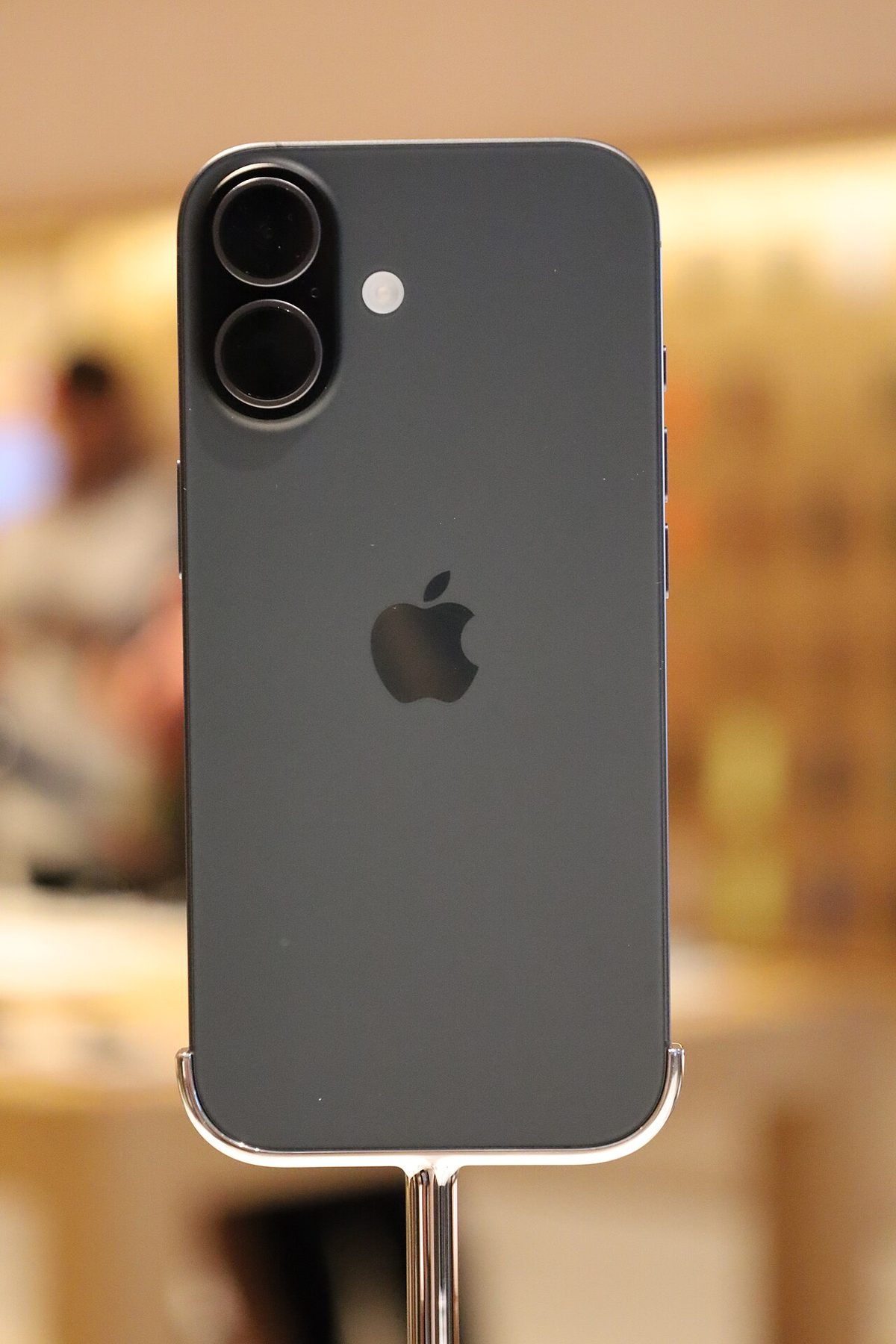
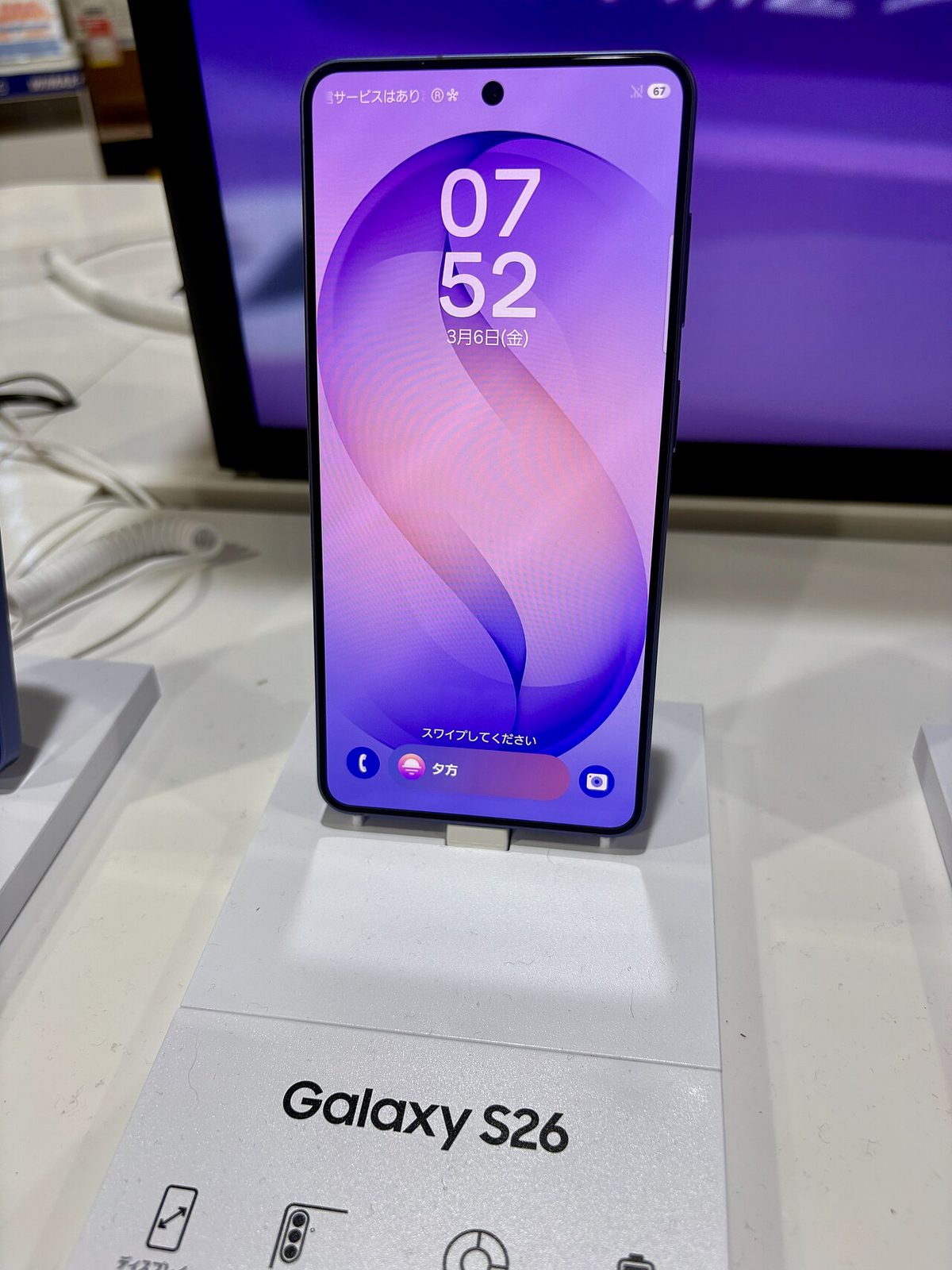
The iPhone 17 and the Samsung Galaxy S26 are the two standard-size flagships most people will cross-shop this year. Both have a 6.3-inch screen, a 120 Hz display, IP68 protection and a starting storage of 256 GB, and on paper they are far closer than their brand loyalties suggest. This comparison draws on Apple's own specifications page and on published lab work from GSMArena (its iPhone 17 review from September 2025 and Galaxy S26 review from March 2026) and BGR's Galaxy S26 review. We have not tested either phone ourselves; each measurement below is credited to whoever took it. Apple's September 2026 event was expected to bring the iPhone 18 Pro line, with the standard iPhone 18 reportedly held back until early 2027, so the iPhone 17 is still Apple's current standard model.
Start with price, because it is the clearest gap. The reported US prices are $799 for the iPhone 17 and $899 for the Galaxy S26 in its 12 GB RAM and 256 GB configuration, a difference of $100 for the same starting storage. We could not confirm those figures on the manufacturers' own store pages, so treat them as reported prices and check the current one before you buy.
Battery is where the spec sheets and the tests tell different stories. The Galaxy S26 has the larger cell, 4,300 mAh against the iPhone 17's 3,692 mAh. Apple quotes up to 30 hours of video playback, but a maker's own claim is not a like-for-like measure across brands. GSMArena's single Active Use Score, measured the same way for both, is 15 hours 20 minutes for the Galaxy S26 and roughly 15 hours for the iPhone 17. In other words, Samsung needs about 600 mAh more battery to reach the same measured endurance. GSMArena also placed the S26 level with the iPhone 17 Pro on endurance, and behind rivals with larger batteries, such as the Xiaomi 17 and vivo X300.
Charging is close and neither phone is fast by 2026 standards. GSMArena measured 62 percent in 30 minutes and a full charge in 1 hour 4 minutes for the S26 on its 25 W wired charging. For the iPhone 17 it recorded 63 percent in 30 minutes and about 1 hour 25 minutes to full on a Google charger, or about 1 hour 14 minutes on Apple's own. Apple claims 50 percent in 20 minutes with a 40 W adapter. For wireless, the iPhone supports MagSafe at up to 25 W; the Galaxy S26 is capped at 15 W, and BGR notes it has no Qi2 magnets, which means accessories that snap onto the back are a workaround rather than a built-in feature.
The displays are more alike than different, with one nuance. Both are 6.3 inches at 120 Hz. Apple's OLED is 2622 by 1206 pixels at 460 ppi, and Samsung's is 1080 by 2340 at 411 ppi, so Apple's is sharper on paper, though neither shows the difference in normal use. Apple claims 3,000 nits of outdoor peak brightness and Samsung lists 2,600. GSMArena's measurements, taken under its own conditions for each phone, show the iPhone 17 at 824 nits with the brightness slider maxed out and 1,012 nits sustained in automatic mode, with a short burst above 1,700 nits; the Galaxy S26 measured 751 nits on the manual slider, about 1,400 nits in automatic mode and 2,552 nits at its peak on a small white area. The two sets of figures use different test conditions, such as the size of the bright area, so they are not a like-for-like ranking.
The cameras are where the two phones diverge in what they offer rather than how well they perform. The Galaxy S26 has a 50 MP main camera, a 12 MP ultrawide and a 10 MP telephoto with 3x optical zoom, plus a 12 MP front camera. The iPhone 17 has a 48 MP main camera at f/1.6, a 48 MP ultrawide at f/2.2 and an 18 MP front camera, and its 2x zoom comes from the main sensor, which Apple describes as an optical-quality 2x telephoto, rather than from a dedicated telephoto lens. If you shoot distant subjects, a true 3x lens on the Samsung is a real advantage. If you mostly shoot close and want a high-resolution ultrawide and a sharper selfie camera, the Apple is better equipped, with a higher-resolution ultrawide and front camera. BGR's reviewer found the Galaxy S26 ahead of the iPhone 17 and the Pixel 10 in dynamic range and color vibrancy, while also noting that Samsung added no new camera hardware over the S25.
Performance is a wash for almost everyone. The iPhone 17 uses Apple's A19 chip, and the Galaxy S26 uses Qualcomm's Snapdragon 8 Elite Gen 5 in the US and China, but Samsung's own Exynos 2600 in most other markets. That regional split matters: if you are outside the US, ask which chip your unit has before comparing it with reviews written on the Snapdragon version.
Software support is where Samsung makes its clearest promise. The Galaxy S26 ships with Android 16 and One UI 8.5 and comes with seven years of updates. None of the sources we used gives a comparable year count for the iPhone 17, so we do not put a number on Apple's side; historically Apple has supported its phones for many years without publishing one. If long guaranteed support is a deciding factor, Samsung's written commitment is the more concrete of the two.
Build and size are nearly equal. Both are IP68, and Apple's front is Ceramic Shield 2. The iPhone 17 weighs 177 grams and measures 149.6 by 71.5 mm; the Galaxy S26 weighs 167 grams at 149.6 by 71.7 by 7.2 mm, so Samsung's phone is 10 grams lighter. Storage starts at 256 GB for both, with the iPhone also offered at 512 GB and the Galaxy S26 at 512 GB and 1 TB.
So which should you buy? If you already own an iPhone, a Mac or AirPods, the iPhone 17 is the natural choice: it costs $100 less, matches the Samsung on measured battery endurance, charges wirelessly faster and has the higher-resolution ultrawide and front cameras. If you use Android, want a real 3x telephoto, a written seven-year update commitment, or a lighter phone, the Galaxy S26 is the better fit, and BGR calls it excellent but iterative while GSMArena calls it a modest upgrade, so owners of an S25 have little reason to move. Neither phone is a mistake. The decision comes down to the ecosystem you are already in and whether $100 buys you the zoom lens and the update promise.
| Category | Apple iPhone 17 | Samsung Galaxy S26 |
|---|---|---|
| US price, 256 GB (reported, unconfirmed) | $799 | $899 |
| Display | 6.3-inch OLED, 2622 x 1206, 120 Hz | 6.3-inch LTPO AMOLED, 1080 x 2340, 120 Hz |
| Peak brightness (maker claim) | 3,000 nits | 2,600 nits |
| Brightness (GSMArena measured) | 824 nits manual; 1,012 nits sustained auto | 751 nits manual; ~1,400 nits auto; 2,552 nits peak |
| Chip | A19 | Snapdragon 8 Elite Gen 5 (US, China); Exynos 2600 elsewhere |
| Main camera | 48 MP, f/1.6 | 50 MP, f/1.8, OIS |
| Ultrawide / telephoto | 48 MP ultrawide; 2x optical-quality crop | 12 MP ultrawide; 10 MP 3x telephoto |
| Front camera | 18 MP | 12 MP |
| Battery capacity | 3,692 mAh | 4,300 mAh |
| Battery, Active Use Score (GSMArena) | ~15 hours | 15 h 20 min |
| Charging tested (GSMArena) | 63% in 30 min; full in ~1 h 14 min (Apple charger) | 62% in 30 min; full in 1 h 04 min |
| Wireless charging | MagSafe up to 25 W | 15 W, no Qi2 magnets |
| Software | iOS (no update promise in sources) | Android 16, One UI 8.5, 7 years of updates |
| Weight | 177 g | 167 g |
| Water and dust resistance | IP68 | IP68 |
Related devices
Related articles
- Google Pixel 10a vs. Samsung Galaxy A57: The $499 Pixel Outlasts and Outruns, the Samsung Is Bigger and Slimmer
- Sony WH-1000XM6 vs. Bose QuietComfort Ultra (2nd Gen): Two Labs Disagree on Battery, and Comfort Decides the Rest
- iPhone 18 Pro vs. Pixel 11 Pro: A Faster Chip and Longer Battery Against a Far Brighter Screen and $100 Off
- AirPods Pro 3 vs. Sony WF-1000XM6: An $80 Price Gap Against More Control Over the Sound
Sources
- Apple: iPhone 17 technical specifications
- GSMArena: Apple iPhone 17 review (battery, display and charging tests)
- GSMArena: Samsung Galaxy S26 review (battery, display and charging tests)
- GSMArena: Samsung Galaxy S26 specifications and review
- BGR: Samsung Galaxy S26 review
- PhoneArena: Apple iPhone 17 vs Samsung Galaxy S26 specs comparison (reported US prices)
- Business Today: Apple event 2026 announced for September 9 (iPhone 18 Pro series)