Galaxy S26 Ultra vs Galaxy S25 Ultra: What's the Difference? A $100 Price Gap at Launch Is Now the Gap Between Current List Prices Too
Samsung's newest Ultra costs the same $100 premium over last year's model that it did at launch, now that both phones' prices have moved — and the upgrades you get for it are real but narrow.
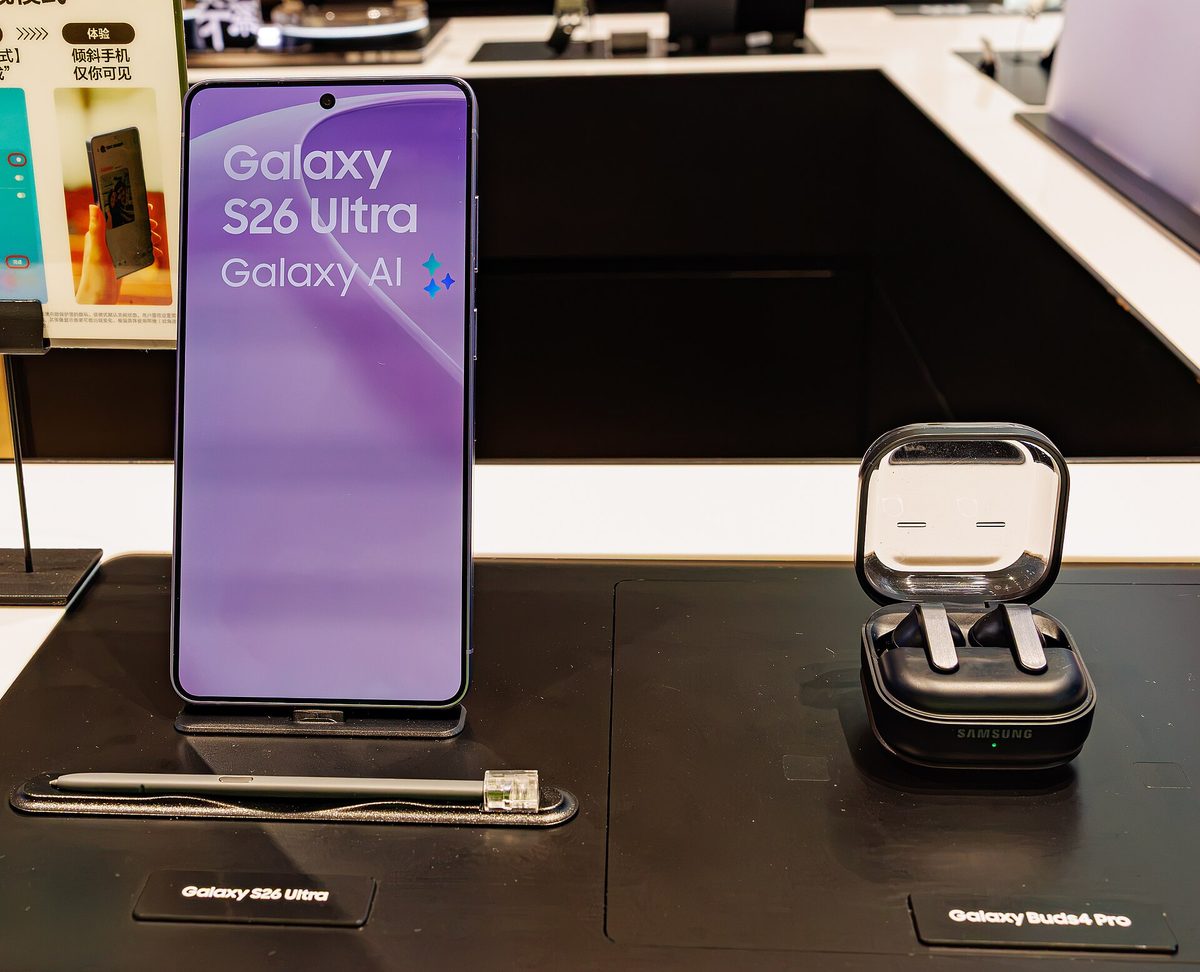
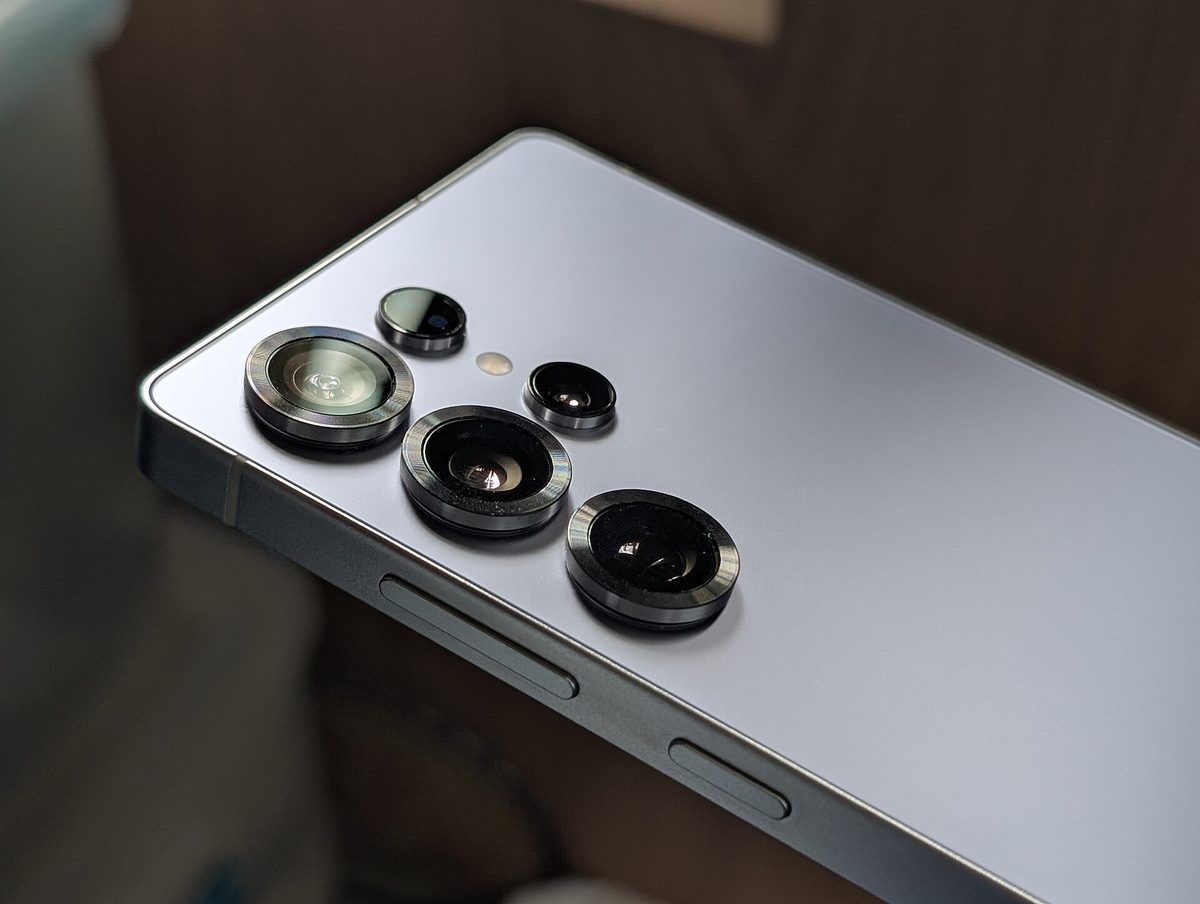
Samsung's Galaxy S26 Ultra and Galaxy S25 Ultra sit a year and a chipset generation apart, and on Samsung's own US site right now, a $100 price gap as well: the S26 Ultra lists at $1,399.99 for 256GB as of this writing, after Samsung raised S26-series prices by $100 across the board on October 1, 2026, while the S25 Ultra's original launch price of $1,299.99 has stayed put on Samsung's site more than a year and a half after its release. The two phones look nearly identical on a spec sheet and share the same screen size, battery capacity and camera layout — the real differences live in chipset, measured battery life, charging speed and camera score, each backed by independent lab testing rather than Samsung's own marketing claims.
Price: a moving target that lands in the same place
The S26 Ultra launched at $1,299.99 for 256GB on February 25, 2026, the same starting price as the S25 Ultra a year earlier — then Samsung raised the entire S26 lineup by $100 on October 1, 2026, taking the 256GB model to $1,399.99, the 512GB to $1,599.99, and the 1TB model up $200 to $1,999.99. The S25 Ultra's pricing, meanwhile, has not moved: Samsung's site still lists it at $1,299.99 (256GB), $1,419.99 (512GB) and $1,659.99 (1TB). The practical result is that the exact $100 premium the S26 Ultra carried over the S25 Ultra at launch is still the premium today, just because both phones' prices shifted in ways that cancel out — not because Samsung is discounting last year's flagship to clear it out.
Chipset: a real generational jump, not just a name change
The S26 Ultra runs Qualcomm's Snapdragon 8 Elite Gen 5, built on a 3nm process; the S25 Ultra runs the original Snapdragon 8 Elite, also 3nm but the prior generation of Qualcomm's own chip line. Both pair with up to 16GB of RAM on their top storage tier. Neither GSMArena nor DXOMARK publishes a head-to-head synthetic benchmark comparison as part of their standard review, so the chipset gap is better understood through what it enables elsewhere in this comparison — camera processing and battery efficiency — than through a raw benchmark number.
Battery: a real, independently measured improvement
Both phones carry the same 5,000mAh battery capacity, so the difference comes entirely from efficiency, not cell size. GSMArena's own lab testing gives the S26 Ultra an Active Use Score of 16 hours 23 minutes, up from the S25 Ultra's 14 hours 49 minutes on the same test — a genuine 1 hour 34 minute improvement from a battery that didn't get any bigger, which GSMArena attributes mainly to gains in web browsing and video streaming efficiency. That's the kind of difference that shows up as finishing a long day with real battery left rather than reaching for a charger by early evening, even though the headline battery capacity spec reads identical on both phones' box.
Charging: meaningfully faster, with the numbers to show it
GSMArena's charging tests, run with each phone's own rated adapter, found the S26 Ultra reaching 51% in 15 minutes and 84% in 30 minutes, finishing a full 0-100% charge in 43 minutes. The S25 Ultra reached 41% at 15 minutes and 72% at 30 minutes, taking 59 minutes for a full charge. That's a real 16-minute difference for a full charge, and an even more noticeable gap in the first 15 minutes — the window that matters most for someone topping up before heading out the door rather than charging fully overnight.
Display: brighter in daily use, dimmer at one specific setting
Both phones use the same 6.9-inch Dynamic LTPO AMOLED 2X panel at 1440x3120 resolution and 120Hz, so the upgrade here is in brightness, not size or sharpness, and it isn't a clean win across every measurement. GSMArena measured the S26 Ultra's adaptive auto-brightness mode at 1,480 nits against the S25 Ultra's 1,417 nits, and the S26 Ultra's peak auto-brightness in bright sunlight at 2,800 nits, well above anything GSMArena recorded for the S25 Ultra. But in manual brightness mode, the S26 Ultra actually measured dimmer than its predecessor, 708 nits against the S25 Ultra's 784 nits — a detail that matters specifically for anyone who prefers to set brightness manually rather than rely on the auto setting, where the newer phone is the brighter one.
Camera: a real DXOMARK improvement, still outside the top tier
DXOMARK scored the Galaxy S26 Ultra's camera at 157 overall (160 for photo, 153 for video), placing it 22nd in its global ranking. The Galaxy S25 Ultra, in DXOMARK's own June 2025 retest, scored 151 overall (152 photo, 150 video), ranking 35th. That's a real 6-point gain and a meaningful jump in rank, and DXOMARK specifically credits the S26 Ultra with better low-light detail, reduced noise and more natural colors than its predecessor. Neither phone cracks DXOMARK's top tier, and autofocus reliability in dim conditions remains a flagged weakness on both generations — this is a real improvement, not a transformed camera system.
Build and design: the same formula, barely adjusted
Dimensions and weight moved only slightly: the S26 Ultra is 163.6 x 78.1 x 7.9mm and 214g, against the S25 Ultra's 162.8 x 77.6 x 8.2mm and 218g — marginally larger in footprint, very slightly thinner and 4g lighter. Both carry an IP68 rating and a titanium-adjacent premium build (Gorilla Armor 2 glass front on both generations), and both keep the same 200MP main camera resolution, 10MP 3x telephoto, 50MP 5x periscope and 50MP ultrawide layout — the hardware lens configuration genuinely did not change generation to generation, which is part of why the camera gain above comes entirely from processing rather than new optics.
Software updates: no difference at all
This is one place where buying the older phone costs nothing in longevity. Samsung's seven-year update commitment — seven major Android OS upgrades plus seven years of security patches — started with the Galaxy S24 series and covers both the S25 Ultra and S26 Ultra identically. The S25 Ultra, which shipped with Android 15, is covered into 2032; the S26 Ultra, which shipped with Android 16, is covered into 2033. A buyer choosing the S25 Ultra specifically to save $100 isn't trading away software support to do it — both phones are on the same seven-year clock, just offset by the one year that separates their release dates.
Storage and RAM: nearly matched, one quiet downgrade on paper
Both phones offer 256GB, 512GB and 1TB storage tiers. The base 256GB and mid 512GB configurations carry 12GB of RAM on both generations; the 1TB configuration is where they diverge slightly, with the S26 Ultra's top tier running 16GB of RAM against configurations of the S25 Ultra that were offered with either 12GB or 16GB depending on market and retailer. For anyone buying the base 256GB/12GB configuration specifically, which is what most buyers of either phone actually choose, memory is a non-factor in this comparison either way.
Galaxy AI: mostly shared, with a couple of holdouts
Software features move between generations faster than hardware does, and that's happened here too: Prioritize Notifications and File Summaries launched exclusively on the S26 series but have since been extended to the S25 series as well, so they're no longer a reason to pick one phone over the other. As of this writing, Now Nudge — a feature that reads context in supported messaging apps to suggest calendar actions or surface relevant photos without leaving the conversation — along with some enhanced Finder search capabilities remain exclusive to the S26 series. Samsung has a track record of eventually extending Galaxy AI features down to older Ultra models, so treat this gap as narrowing over time rather than permanent, not as a reason on its own to pay the $100 premium today.
Who should actually pay the $100
Buy the Galaxy S26 Ultra if battery life and charging speed are what actually bother you about your current phone, or if you want the camera improvement DXOMARK measured and plan to keep the phone for several years where a newer chipset's longevity matters. Buy the Galaxy S25 Ultra — still sold new, at its original price, not a clearance deal — if the $100 difference matters more to you than 1.5 extra hours of battery life and 16 fewer minutes of charging time; the core experience, screen, and camera hardware are close enough that the S25 Ultra remains a legitimate current purchase, not just a hand-me-down flagship.
Either way, the decision comes down to a short, specific list rather than a vague sense that newer is better: battery life, charging speed, and camera score are the three places independent labs measured a real gap, software support is identical on both phones for years to come, and the remaining Galaxy AI exclusives are the kind of feature gap that has already started narrowing and will likely keep doing so. That's a much narrower, more answerable question than "which Ultra should I buy," and it's the one actually worth asking before paying the $100.
| Specs | Galaxy S26 Ultra | Galaxy S25 Ultra |
|---|---|---|
| Current US price (256GB) | $1,399.99 | $1,299.99 |
| Launch price (256GB) | $1,299.99 (Feb 2026) | $1,299.99 (Jan 2025) |
| Chipset | Snapdragon 8 Elite Gen 5 | Snapdragon 8 Elite |
| Battery (GSMArena Active Use Score) | 16h 23min | 14h 49min |
| Charging (0-100%, GSMArena) | 43 min | 59 min |
| DXOMARK camera score | 157 (rank 22) | 151 (rank 35) |
| Display peak brightness (auto) | 1,480 nits | 1,417 nits |
| Weight | 214g | 218g |
Related devices
Related articles
- Galaxy S26 FE Lab Tests: Nearly 3 Hours More Battery From the Same Cell, for $50 More
- Samsung Raises Galaxy S26 Prices by $100 Seven Months After Launch; the 1TB Ultra Is Now $1,999.99
- Galaxy S26 vs S26 FE: Which Should You Buy in 2026? A $300 Gap Buys a Smaller, Brighter, Faster Phone, and the Cheaper One Charges Quicker
- iPhone 18 Pro Max vs Galaxy S26 Ultra: Which Should You Buy? A $100 Price Gap Buys a Faster Charge and 3 More Hours of Battery