Galaxy Z Fold8 vs Z Fold7: What's the Difference? The Newer One Is $100 Cheaper, 14 Grams Lighter, and Drops the Telephoto Lens Entirely
Samsung's newest foldable is cheaper, lighter and faster-charging than the phone it replaces, but the standard Z Fold8 trades away a camera feature the Z Fold7 has had for two generations.
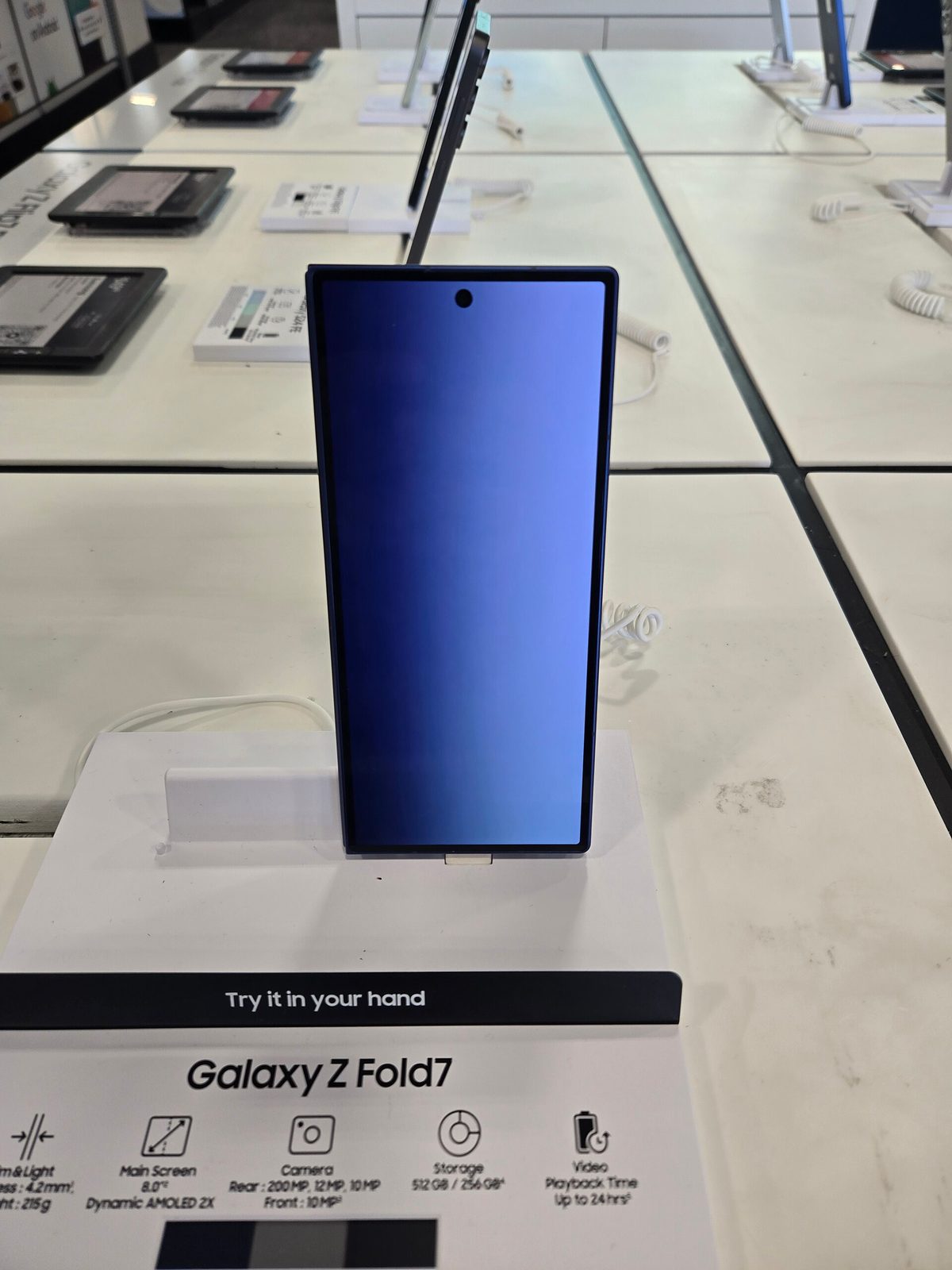
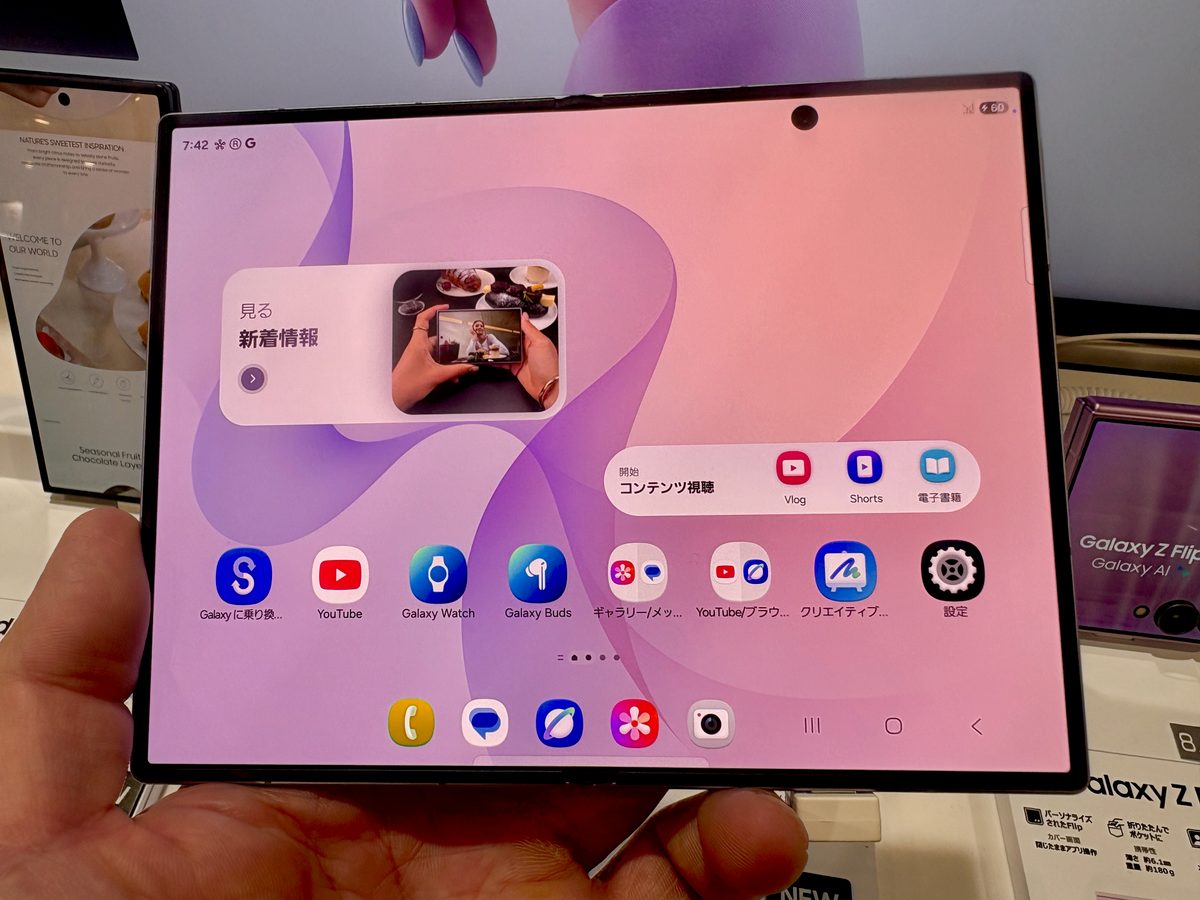
Samsung's Galaxy Z Fold8 launched in August 2026 at $1,899.99 for the base 256GB model, replacing the Galaxy Z Fold7, which remains on sale at Samsung.com at $1,999.99 for the same storage tier. That's unusual: a new flagship launching below the price of the phone it succeeds, rather than at the same price or higher. The rest of the changes are just as mixed as the price tag suggests — some clear upgrades, one real downgrade, and a redesigned shape that changes how the phone actually feels to use day to day.
Price and what it buys
At $1,899.99, the standard Z Fold8 undercuts the Z Fold7's current $1,999.99 list price by $100. Both phones start at 256GB of storage with 12GB of RAM, and both top out at 1TB. Samsung also sells a Z Fold8 Ultra variant above the standard model, which restores a telephoto camera the standard Fold8 lacks — more on that below. For anyone comparing only the standard, non-Ultra models, the Fold8 is simply the cheaper phone of the two, which is the opposite of how most phone generations play out.
Design: a genuinely different shape, not just a refinement
This is the biggest change, and it's not subtle. The Z Fold7 measures 8.0 inches across its inner display when unfolded; the Z Fold8 drops to 7.6 inches on paper, but the shape itself has changed — Samsung built the Fold8 shorter and wider, closer to a passport's proportions, versus the taller, narrower shape of the Fold7 and its predecessors. The cover screen shrinks on the same logic, from 6.5 inches on the Fold7 to 5.5 inches on the Fold8. Folded, the Fold8 is about 5.7mm wider than the Fold7 (72.8mm vs 67.1mm), which is the real-world result of that shape change — it's a different phone in the hand, not just a smaller number on a spec sheet. Samsung also switched to what it calls a Flex Titanium hinge on the Fold8, pitched as more durable and better at minimizing the visible crease down the middle of the inner display, though independent durability testing hasn't yet confirmed how much that changes long-term.
Display brightness and resolution
Despite the smaller stated size, the Fold8's screens get brighter: Samsung rates the inner display at 3,000 nits peak brightness against the Fold7's 2,600 nits, and the company's own materials describe both the cover and main displays as roughly 15% brighter than the outgoing model's. Resolution moves to 2448 x 1848 on the Fold8's inner panel (a 4:3 ratio, matching the new wider shape) versus 1968 x 2184 on the Fold7 (a taller, narrower ratio). Both panels remain 120Hz Dynamic LTPO AMOLED 2X.
The camera trade-off that actually matters
Here's where Fold8 buyers need to pay attention. The Z Fold7 ships with a 200MP f/1.7 main wide camera, a 12MP ultrawide, and a 10MP telephoto with genuine 3x optical zoom. The standard Z Fold8 drops the telephoto lens entirely, pairing a 50MP f/1.8 main wide camera with a new 50MP f/1.9 ultrawide — a real upgrade over the Fold7's 12MP ultrawide for wide shots, but a real loss for anyone who used the Fold7's optical zoom regularly. Samsung does sell a Z Fold8 Ultra that restores a telephoto (200MP main plus a 10MP 3x zoom lens, matching the Fold7's zoom reach) at a higher price than the standard Fold8 — so the zoom capability didn't disappear from the lineup, it just moved to a pricier model. Anyone who leans on zoom for photos of kids' sports, concerts or wildlife should treat this as the single most important spec in this comparison, not a footnote.
Battery and charging
The Fold8 gets a real battery upgrade: 4,800 mAh versus the Fold7's 4,400 mAh, a roughly 9% capacity increase. Charging speed jumps more dramatically — 45W wired on the Fold8 (Samsung rates it at 63% charge in 30 minutes) against 25W wired on the Fold7 (50% in 30 minutes). Wireless charging also improves, from 15W to 20W. Both phones keep the same 4.5W reverse wireless charging for topping up earbuds or a watch.
Hinge and long-term durability
Samsung calls the Fold8's hinge the "Armor FlexHinge" built with Flex Titanium, pitched as both stronger and better at minimizing the visible crease down the center of the inner display compared to the Fold7's hinge — a complaint that's followed every Fold-series phone since the original. This is a real engineering claim worth taking seriously given Samsung's track record of hinge improvements generation over generation, but it's also not something that shows up on a spec sheet in a way that can be independently verified before long-term reviews and teardown testing accumulate. Buyers who had hinge or crease concerns with a Fold7 or earlier model should treat this as a promising claim, not a proven fact, until independent durability labs publish results.
Software updates: not actually a difference
Some coverage has framed the Fold8 as getting "an extra year" of software support over the Fold7, since the Fold7 is promised updates through roughly Android 23 and the Fold8 through Android 24. That's true on paper, but it's a function of the Fold8 launching a year later with the same policy, not a genuinely longer support window — both phones carry Samsung's standard commitment of up to seven major Android version updates from their respective launch dates. Anyone deciding between the two phones shouldn't weigh this as a real point in the Fold8's favor; it's the same promise, just measured from a later starting line.
Weight, chipset and everything else
The Fold8 is 201 grams against the Fold7's 215 grams — a 14-gram difference that Samsung markets as making the Fold8 "the world's lightest fold." Processing moves from the Snapdragon 8 Elite in the Fold7 to the newer Snapdragon 8 Elite Gen 5 in the Fold8, a straightforward generational chip upgrade. Both phones carry an IP48 rating for dust and water resistance, both launched with roughly similar software-support commitments around major OS updates, and both run One UI 9 on top of Android — the Fold7 launched on Android 16 and updated to Android 17, while the Fold8 ships with Android 17 from the start.
Should you upgrade from a Z Fold7
What this means if you're shopping used or for cases
The shape change has a practical downside for anyone buying secondhand or shopping accessories: cases, screen protectors and folios built for the Z Fold7's taller, narrower body don't fit the Z Fold8's shorter, wider one, since the folded footprint itself changed by several millimeters in each direction. If you already own a case collection built around the Fold7's dimensions, that's a real cost to factor in beyond the phone's sticker price. On the resale side, the Fold7's price holding steady at $1,999.99 even after the cheaper Fold8 launched suggests Samsung isn't positioning the outgoing phone as a clearance item — if you can find a Fold7 discounted below its list price through a carrier deal or trade-in promotion, it remains a legitimate buy for anyone who specifically wants to keep the 3x telephoto camera.
If you specifically use the Fold7's 3x optical zoom — for kids' sports, concerts, travel photography where you can't get close — the standard Z Fold8 is a downgrade in exactly that one dimension, and either keeping the Fold7 or stepping up to the pricier Z Fold8 Ultra makes more sense than the standard Fold8. If you don't use zoom much and care more about charging speed, battery life, weight and a different in-hand shape, the Z Fold8 is a clear upgrade that also happens to cost $100 less than what the Fold7 is currently listed at. And if you're coming from a Z Fold7 or earlier and don't already own a drawer full of cases and accessories built for the old, taller shape, the Fold8's redesigned proportions are worth trying in person before buying online — the move from a tall, narrow unfolded screen to a shorter, wider one changes how the phone handles for reading, typing and one-handed use in ways a spec sheet can't fully convey.
| Spec | Galaxy Z Fold7 | Galaxy Z Fold8 |
|---|---|---|
| Price (256GB) | $1,999.99 | $1,899.99 |
| Main display | 8.0", 1968x2184, 2600 nits | 7.6", 2448x1848 (4:3), 3000 nits |
| Cover display | 6.5" | 5.5" |
| Chipset | Snapdragon 8 Elite | Snapdragon 8 Elite Gen 5 |
| Main camera | 200MP f/1.7 wide | 50MP f/1.8 wide |
| Telephoto | 10MP, 3x optical zoom | None (standard model) |
| Ultrawide | 12MP f/2.2 | 50MP f/1.9 |
| Battery | 4,400 mAh | 4,800 mAh |
| Wired charging | 25W (50% in 30 min) | 45W (63% in 30 min) |
| Weight | 215 g | 201 g |
| Durability | IP48 | IP48 |
Related devices
Related articles
- iPhone 18 Pro Max vs Galaxy S26 Ultra: Which Should You Buy? A $100 Price Gap Buys a Faster Charge and 3 More Hours of Battery
- iPhone Duo vs Galaxy Z Fold8: Which Should You Buy? They're $100 Apart, and the Cheaper One Is Also 53 Grams Lighter
- Pixel 11 vs Galaxy S26: Which Should You Buy? — The Pixel Has the Brighter Screen and Wireless Charging, the Samsung Is 30 Grams Lighter and Faster
- Apple Watch Series 12 vs Series 11: What's Different? Same $399 Price, But Apple Already Discontinued the Series 11
Sources
- Samsung.com — Galaxy Z Fold8
- Samsung.com — Galaxy Z Fold7
- GSMArena — Samsung Galaxy Z Fold8 full specifications
- GSMArena — Samsung Galaxy Z Fold7 full specifications
- Gadget Hacks — Galaxy Z Fold 8 Wide Camera Specs: Dual 50MP, No Telephoto
- TelecomTalk — Samsung Galaxy Z Fold 8 vs Z Fold 7: Main Differences