Pixel 11 vs Galaxy S26: Which Should You Buy? — The Pixel Has the Brighter Screen and Wireless Charging, the Samsung Is 30 Grams Lighter and Faster
Two 6.3-inch flagships with 256 GB and seven years of updates. GSMArena's lab numbers show a battery draw, a clear Pixel win on brightness and wireless charging, and a clear Samsung win on weight and speed.
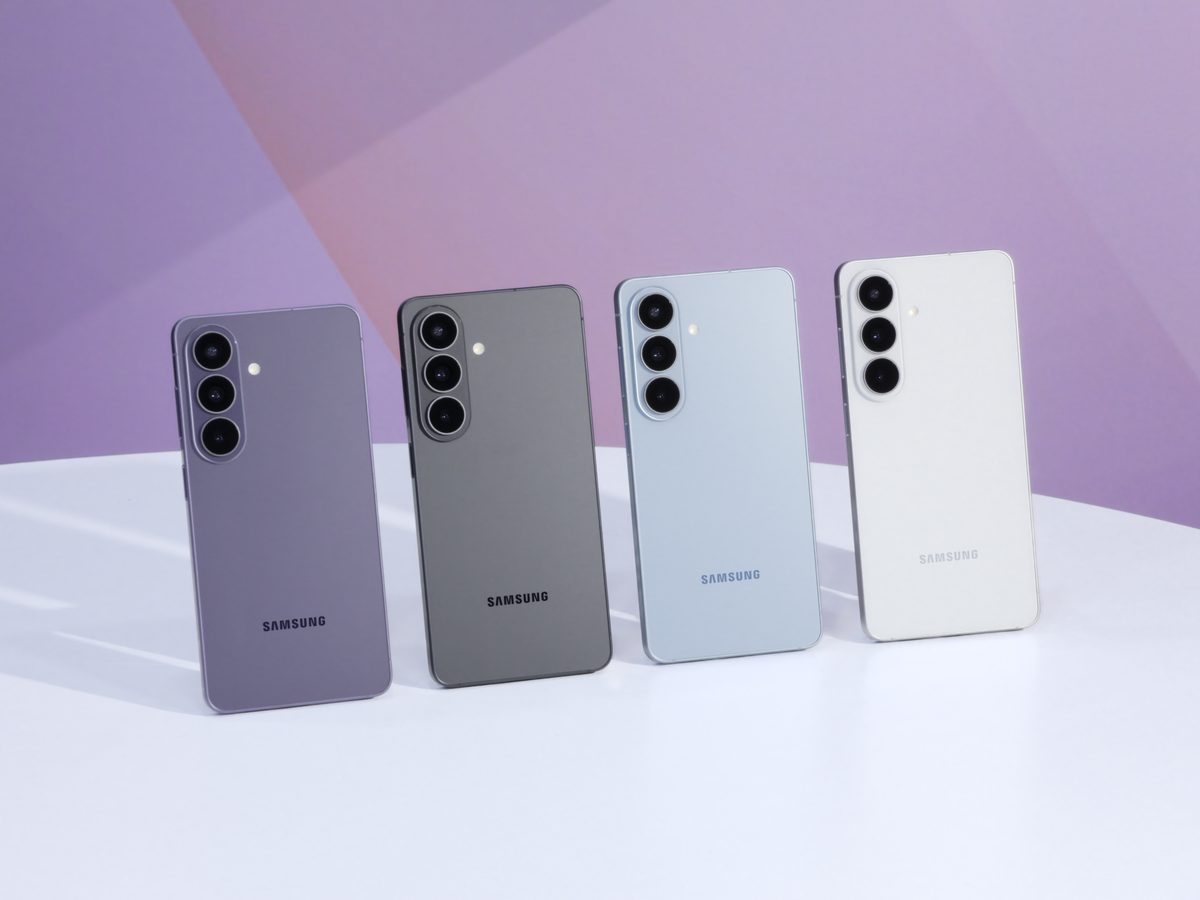
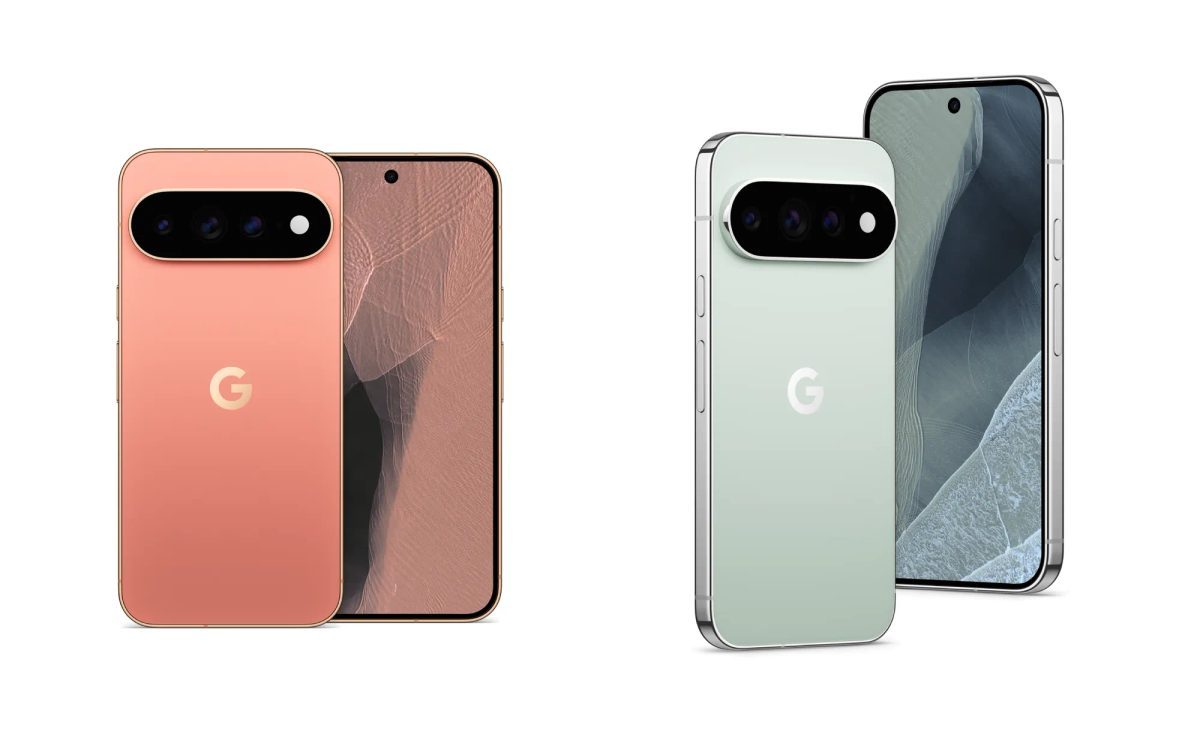
Google's Pixel 11 launched on August 20, 2026 at $899, $100 more than the Pixel 10, with the base storage doubled to 256 GB. Samsung's Galaxy S26 now lists at $999.99 in the US after an October 1 price increase. Put the two on the same shelf and you get the closest comparison in the premium compact class: both have a 6.3-inch OLED, both have 256 GB as the entry tier and both promise seven years of Android updates. The measurements below come from GSMArena's lab reviews of both phones. One caveat up front: GSMArena tested the Exynos 2600 version of the S26 sold in Europe and elsewhere, while US buyers get the Snapdragon 8 Elite Gen 5, so the benchmark and battery figures for the Samsung are not from the chip you would get in the US.
Start with the body, because it is where the two phones differ most. The Pixel 11 measures 152.8 by 72.0 by 8.6 mm and weighs 197 grams. The Galaxy S26 is 149.6 by 71.7 by 7.2 mm and weighs 167 grams. That is 30 grams and 1.4 mm less, and in the hand the Samsung is the more pocketable phone by a clear margin. Both use Gorilla Glass Victus 2 and both are rated IP68. GSMArena lists the Pixel's premium, sturdy build and compact size among its strengths, and lists the S26's premium build quality as a strength too, while pointing out that other Android phones now carry the higher IP69 rating. If a light phone is what you want, this round goes to Samsung without a fight.
The screens are the same size and very different in brightness. GSMArena's lab measured the Pixel 11 at 2,134 nits with automatic brightness and a 75 percent white fill, and 2,842 nits in a small bright area. The Galaxy S26 reached 1,383 nits and 2,552 nits in the same tests. With the brightness slider set by hand, the gap is wider: 1,307 nits for the Pixel against 751 for the Samsung. The Pixel is also slightly sharper at 422 pixels per inch against 411. In direct sun the Pixel is the easier phone to read. GSMArena's cons for the Pixel are a very basic refresh implementation that only switches between 60 and 120 Hz; its cons for the Samsung are a panel without 10-bit depth, high-frequency PWM dimming or Dolby Vision. Neither review shows a display flaw you would notice in daily use, but the brightness advantage is measurable and it belongs to the Pixel.
Battery life is a draw on the numbers that matter. GSMArena's Active Use Score, which blends calling, web browsing, video and gaming, came to 15 hours 40 minutes for the Pixel 11 and 15 hours 20 minutes for the Galaxy S26. Twenty minutes is within what you would call noise, and the Samsung got there with a 4,300 mAh battery against the Pixel's 4,985 mAh, though the Samsung result comes from the Exynos unit. For context, the Pixel 11 improved a great deal on its predecessor: the Pixel 10 scored 12 hours 8 minutes in the same test, and GSMArena says the Pixel 11 beat it in every individual test. Gaming alone went up by nearly four hours from the Pixel 10's 5 hours 47 minutes. So the Pixel fixed last year's weak point, and in doing so caught up with the Samsung rather than passing it.
Charging goes against the spec sheet. On paper the Pixel charges at 30 W and the Samsung at 25 W. In GSMArena's tests the Galaxy S26 reached 34 percent in 15 minutes, 62 percent in 30 minutes and full in 1 hour 4 minutes. The Pixel 11, with its Extreme charging mode on, reached 31 percent, 59 percent and full in 1 hour 19 minutes. The Samsung is therefore a little faster at every point and 15 minutes quicker to a full charge, even though its rated power is lower. Wireless is the other way round. The Pixel supports 25 W magnetic charging over Qi2.2, which GSMArena lists as a pro; the S26 is limited to 15 W and is labeled Qi2 Ready. If you charge on a magnetic stand at your desk every day, the Pixel is better. If you plug in for a quick top-up before leaving the house, the Samsung is.
Performance is the Samsung's clearest win. In Geekbench 6 the Pixel 11 scored 2,731 single-core and 7,429 multi-core. GSMArena's Exynos 2600 S26 scored 2,995 and 10,824. In 3DMark Wild Life Extreme the Pixel's Tensor G6 scored between 2,360 and 3,451 depending on the preset, against 7,230 for the Samsung. GSMArena says the Tensor G6 gives a clear CPU jump over the G5, more than 20 percent in multi-core, but that the GPU has barely moved and has no hardware ray tracing, and it puts the chip's performance closer to a Dimensity 8300 or Snapdragon 8 Gen 2 than to a current flagship. The S26 is not free of problems: GSMArena measured about a 40 percent CPU loss and more than 50 percent GPU loss in its stress tests. The Pixel's stability was reported at 58 to 68 percent, which the review calls acceptable but not good. For everyday use you will not feel the difference. For long gaming sessions the Samsung starts far ahead; we have no sustained-load figures for the Snapdragon version sold in the US.
The cameras trade zoom reach for zoom quality. Both phones have a 1/1.56-inch main sensor: 48 MP and f/1.7 on the Pixel, 50 MP and f/1.8 on the Samsung. The Pixel's telephoto is a 5x lens of 10.8 MP; the Samsung's is a 3x lens of 10 MP. GSMArena calls the Pixel's main camera solid in daylight and at night but its 2x results unremarkable, its 5x telephoto good with a native-zoom sweet spot but not sharp beyond that, and its ultrawide good outdoors but unable to focus on close subjects. The S26's review praises its selfie camera and video features such as LUTs and Horizon Lock, and criticizes an unintuitive Night mode. Both have autofocus on the front camera. Our reading: the Pixel is the better pick if you want photos of things further away, since 5x is a more useful reach than 3x. The Samsung is the better pick if video matters more to you.
Software is closer than it looks. The Pixel 11 shipped with Android 17 and Google promises seven major OS updates and seven years of security patches. The Galaxy S26 shipped with Android 16 and One UI 8.5, with the same seven-year promise, and it has since moved to Android 17: 9to5Google reported on October 12 that Samsung's One UI 9 reached the S26 about a month before it reached the S24 series in the US. So the version gap of launch day has closed. What remains is a difference in character. Google's version of Android is cleaner and gets features first; GSMArena's one complaint is limited customization, with no way to remove the app drawer or the search bar. One UI has more features and more Samsung apps, and it carries Samsung's Galaxy AI tools.
Price decides more than any spec here. At list price the Pixel 11 costs $899 for 256 GB and $1,019 for 512 GB. The Galaxy S26 lists at $999.99 for 256 GB after the $100 increase of October 1, 2026. Retailers and Samsung itself run promotions that can bring the S26 close to the Pixel's price; if you find it at about $899, the prices are effectively equal and the question becomes purely which phone you prefer. At $999.99 the Samsung needs a stronger reason than a faster chip.
Both GSMArena reviews are more lukewarm than the phones deserve. Of the Pixel 11 it says that good dependability is hard to sell at $899 and that Pixel 10 owners have almost no reason to upgrade. Of the S26 it says the phone is a very minor upgrade over the Galaxy S25 and that unless you are loyal to Samsung's software and support, better-value phones exist at the same price. Each review also names the other phone as an alternative: the Pixel review points to the S26 as smaller and lighter with a stronger chipset and a 3x telephoto, and the iPhone 17 as a similar-priced option with a far more powerful chip but no telephoto camera.
Our verdict: buy the Pixel 11 at $899 if you want the brighter screen, the 25 W wireless charging, the 5x zoom and Google's cleaner Android, and if you can live with a heavier phone and a chip that trails its rivals. Buy the Galaxy S26 if you want the smallest and lightest phone in this class and the faster processor, but only if you find it at around $899 or less; at $999.99 it is hard to recommend over the Pixel. And if you already own a Pixel 10 or a Galaxy S25, neither phone is a reason to upgrade. We have not tested either phone ourselves; the numbers above are GSMArena's lab results, and the prices were checked on October 19, 2026.
| Specs | Google Pixel 11 | Samsung Galaxy S26 |
|---|---|---|
| US price (October 19, 2026) | $899 (256 GB), $1,019 (512 GB) | $999.99 list (256 GB) |
| Display | 6.3 in OLED, 1080 x 2424, 120 Hz, 422 ppi | 6.3 in LTPO AMOLED, 1080 x 2340, 120 Hz, 411 ppi |
| Brightness (GSMArena: manual / auto 75% / small window) | 1,307 / 2,134 / 2,842 nits | 751 / 1,383 / 2,552 nits |
| Size and weight | 152.8 x 72.0 x 8.6 mm, 197 g | 149.6 x 71.7 x 7.2 mm, 167 g |
| Build | Gorilla Glass Victus 2, aluminum frame, IP68 | Gorilla Glass Victus 2, IP68 |
| Chipset and RAM | Google Tensor G6, 12 GB | Snapdragon 8 Elite Gen 5 (US) or Exynos 2600 (many other markets), 12 GB |
| Geekbench 6 (single / multi) | 2,731 / 7,429 | 2,995 / 10,824 (Exynos 2600 unit) |
| Storage | 256 or 512 GB, UFS 4.x | 256 or 512 GB, 1 TB with 16 GB RAM, UFS 4.x |
| Battery | 4,985 mAh | 4,300 mAh |
| Active Use Score (GSMArena) | 15:40 h | 15:20 h (Exynos unit) |
| Wired charging (15 min / 30 min / full) | 30 W: 31% / 59% / 1:19 h | 25 W: 34% / 62% / 1:04 h |
| Wireless charging | 25 W magnetic, Qi2.2 | 15 W, Qi2 Ready |
| Rear cameras | 48 MP main (1/1.56 in), 10.8 MP 5x telephoto, 13 MP ultrawide | 50 MP main (1/1.56 in), 10 MP 3x telephoto, 12 MP ultrawide |
| Software at launch | Android 17, 7 OS upgrades | Android 16, One UI 8.5, 7 OS upgrades (One UI 9 / Android 17 now rolling out) |
Related devices
Related articles
- iPhone 17 vs Galaxy S26: Which One Should You Buy? Now $200 Apart, and Closer Than the Spec Sheets Suggest
- Samsung Raises Galaxy S26 Prices by $100 Seven Months After Launch; the 1TB Ultra Is Now $1,999.99
- Galaxy S26 vs S26 FE: Which Should You Buy in 2026? A $300 Gap Buys a Smaller, Brighter, Faster Phone, and the Cheaper One Charges Quicker
- Galaxy Z Fold8 vs Z Fold7: What's the Difference? The Newer One Is $100 Cheaper, 14 Grams Lighter, and Drops the Telephoto Lens Entirely
Sources
- GSMArena: Google Pixel 11 review, specifications and price
- GSMArena: Google Pixel 11 review, lab tests (display, charging)
- GSMArena: Google Pixel 11 review, software and performance
- GSMArena: Google Pixel 11 review, camera
- GSMArena: Google Pixel 11 review, verdict, pros and cons
- GSMArena: Our Google Pixel 11 battery life and charging tests are ready (September 8, 2026)
- GSMArena: Samsung Galaxy S26 review, specifications
- GSMArena: Samsung Galaxy S26 review, lab tests (display, battery, charging)
- GSMArena: Samsung Galaxy S26 review, software and performance
- GSMArena: Samsung Galaxy S26 review, verdict, pros and cons
- Google: 7 can't-miss updates from our Pixel 11 launch (prices and August 20 availability)
- iDevice: Samsung raises Galaxy S26 prices in the US by at least $100 (October 1, 2026)
- Samsung US: Galaxy S26 (list price, checked October 19, 2026)
- 9to5Google: Samsung is now rolling out Android 17 to these older Galaxy devices in the US (October 12, 2026)