Google Pixel 10a vs. Samsung Galaxy A57: The $499 Pixel Outlasts and Outruns, the Samsung Is Bigger and Slimmer
The Pixel wins on battery, brightness, speed and update years for $50 less; the Samsung answers with a bigger, thinner body and faster wired charging.

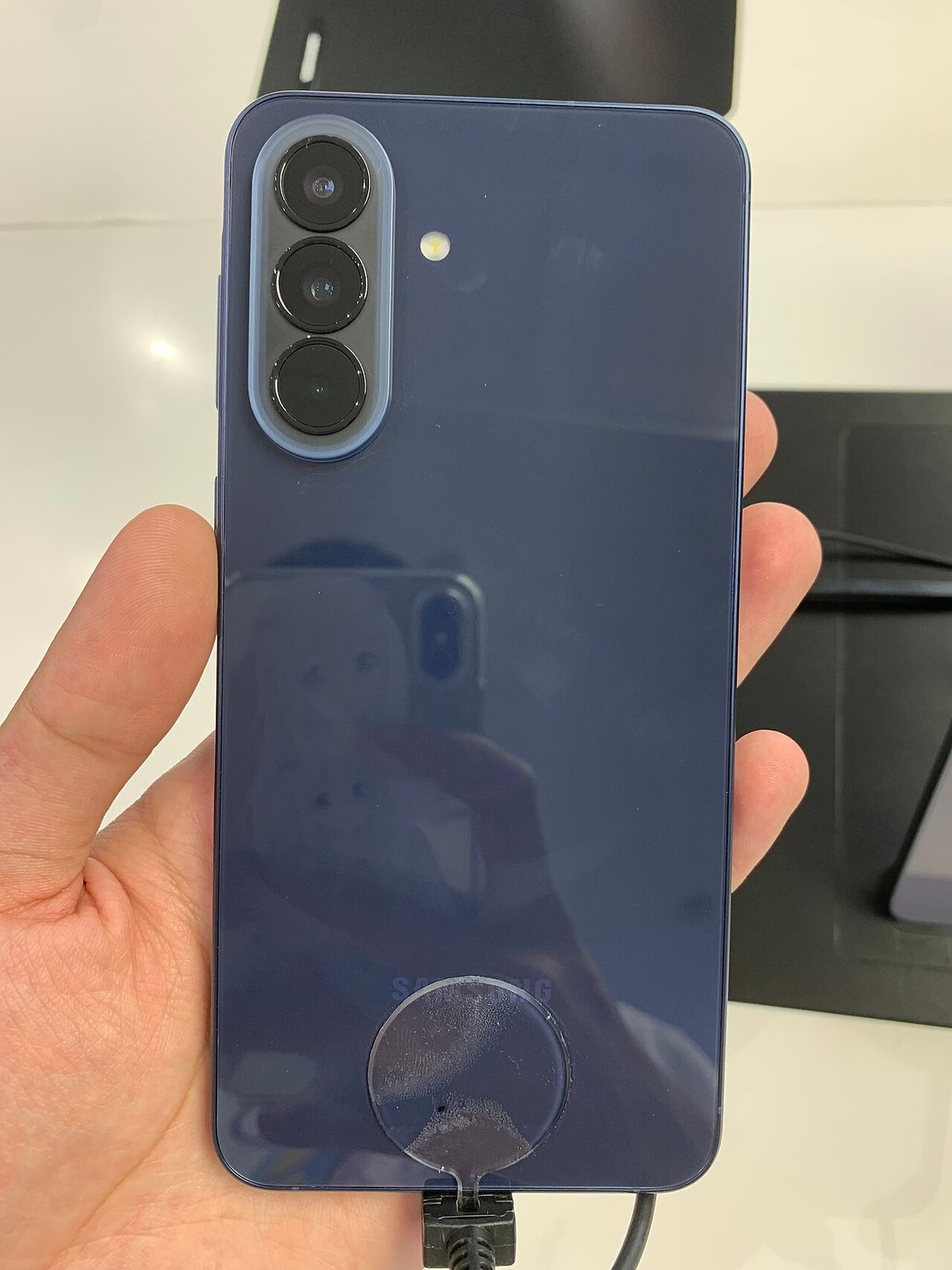
Google's Pixel 10a ($499, on sale since March 5, 2026) and Samsung's Galaxy A57 ($549.99 in the US, on sale since April 9, 2026) are the two midrange phones most US buyers will end up choosing between this year. They overlap more than the $50 gap suggests: both have a 120Hz OLED screen, IP68 water and dust resistance, a battery of 5,000mAh or more and a long software-update promise. Where they really differ is size, chip, charging and how each one handles a camera system, and which of those differences matters depends on how you use a phone. Unless noted, the lab figures below come from GSMArena's reviews of each phone (Pixel 10a, March 14, 2026; Galaxy A57, April 8, 2026), and prices are US list prices as announced by Google and Samsung.
Start with size, because it decides more than any spec. The Pixel 10a has a 6.3-inch screen in a 153.9 x 73 x 9 mm body that weighs 183 g; the Galaxy A57 stretches to 6.7 inches but measures 161.5 x 76.8 x 6.9 mm and weighs 179 g. In practice the Pixel is the phone you can use one-handed and forget in a jeans pocket, while the Samsung gives you a noticeably larger canvas for video, maps and reading in a body that is 2.1 mm thinner and actually 4 g lighter. Android Authority's review called the A57 exceptionally thin and light, and its glass-and-aluminum build (Gorilla Glass Victus+ on the front, a glass back) feels a class above. The Pixel answers with a flat back that has no camera bump at all, so it doesn't rock on a desk, but GSMArena lists its plastic back and thick screen bezels among its few real weaknesses.
The screens are closer on paper than in daylight. Google rates the Pixel 10a's panel at 2,000 nits in high-brightness mode and 3,000 nits peak; Samsung rates the A57 at 1,900 nits peak. GSMArena's measurements bear out the gap: with auto-brightness on, the Pixel reached 2,169 nits against the A57's 1,259, and in a small highlight the Pixel hit about 2,894 nits against 1,869. What that changes is outdoor readability: on a sunny sidewalk the Pixel is the one you can read without shading it with your hand. The difference gets bigger if you set brightness manually. GSMArena measured 1,308 nits on the Pixel's manual slider but only 427 nits on the A57's, because Samsung reserves its high-brightness boost for automatic mode. If you are someone who turns auto-brightness off, the A57's screen will feel dim outdoors. Both run at up to 120Hz, the A57 adds HDR10+, and reviewers called its Super AMOLED+ panel vibrant, but GSMArena notes the Pixel's refresh-rate controls are basic.
Performance is where the Pixel's two-year-old chip still wins. The Pixel 10a uses the Tensor G4 from the Pixel 9 generation; the Galaxy A57 uses Samsung's new Exynos 1680. In GSMArena's Geekbench 6 runs the Pixel scored 1,753 single-core and 4,545 multi-core, the A57 1,376 and 4,411. The single-core lead of roughly 27% is what you feel when apps open and long pages scroll; the multi-core results are nearly tied, so heavy background work is a wash. Graphics are a bigger gap: in 3DMark Wild Life Extreme the Pixel peaked at 2,683 against the A57's 1,742, about 54% more GPU power for games. The Pixel does throttle, dropping to 1,934 in GSMArena's stress loop (around 70% of its peak), while the A57 held 1,728 of its 1,742. Even throttled, the Pixel stays ahead.
Sustained performance is also where the sources disagree, so it's worth spelling out. GSMArena called the Exynos 1680's stability excellent, with 79% CPU and 92% GPU stability in its stress tests. Android Authority's Rushil Agrawal, who used the A57 for a month (review published May 24, 2026), described the opposite in daily life: thermal throttling outdoors and during Android Auto navigation, two-to-three-second tap delays and the display dimming from heat. Both can be true, because a lab stress loop at room temperature is not a phone in a sunny car mount. If you navigate or game for long stretches, that report is the one to weigh. The Pixel ran warm but never hot in GSMArena's testing.
Battery life favors the Pixel, and not by a little. It carries a 5,100mAh cell against the A57's 5,000mAh, and GSMArena's Active Use Score, which blends calls, web browsing, video and gaming, came out at 15:13 hours for the Pixel 10a and 13:59 hours for the Galaxy A57. That is about an hour and a quarter more for the Pixel in the same mixed test, roughly 9%. Neither phone is a day-and-a-half phone for a heavy user, but the Pixel has more margin on a long travel day. Android Authority still got 5.5 to 6 hours of screen-on time from the A57, which is a full day for most people. Google's own claim of over 30 hours of typical use for the Pixel is a manufacturer figure, not a measurement.
Charging flips the result. The A57 supports 45W wired charging and no wireless charging; the Pixel 10a supports 30W wired (up from 27W on the Pixel 9a) plus 10W Qi wireless. GSMArena timed the A57 at 35% after 15 minutes, 64% after 30 and full in 69 minutes with Samsung's 45W charger; the Pixel reached 29%, 52% and full in 89 minutes. So the Samsung tops up about 20 minutes faster from empty, which matters if you forget to charge overnight. But the Pixel can sit on a wireless pad on a nightstand or a car mount, which the A57 cannot do at all. GSMArena calls the Pixel a slow-charging phone by Android standards, and lists slow charging and missing wireless charging among the A57's cons, so neither is a charging champion.
On camera hardware the two take different routes. The Pixel 10a has a 48MP f/1.7 main camera with optical stabilization and a 13MP ultrawide, a 13MP selfie camera and 4K video at up to 60fps. The Galaxy A57 has a 50MP f/1.8 main camera with optical stabilization, a 12MP ultrawide, a 5MP macro and a 12MP selfie camera, and records 4K at 30fps. Neither has a telephoto lens, so zoom on both is a crop from the main sensor. The extra macro lens on the Samsung looks like an advantage on the spec sheet, but Android Authority found it has no autofocus and recommended ignoring it.
Image quality is closer than the Pixel's reputation implies. DXOMARK scored the Pixel 10a's camera at 134 points (test published March 5, 2026), praising accurate exposure, wide dynamic range and pleasant skin tones in portraits, but flagging visible noise in low light and weak zoom without a telephoto. DXOMARK has not published a Galaxy A57 test. GSMArena rated the A57's main and selfie cameras as excellent and its main-camera video as strong, and Android Authority found the main camera produced detailed, punchy photos with good dynamic range, even in low light, while the ultrawide turned soft and noisy when the light dropped. Android Authority still singled out the Pixel as having one of the best point-and-shoot cameras at any price. For video, the Pixel's 4K60 gives smoother motion than the A57's 4K30, which you notice when filming kids or sports.
Software support is a real difference over the life of the phone. Google promises seven years of OS, security and Pixel Drop updates for the 10a; Samsung promises six major Android upgrades for the A57, which ships with Android 16 and One UI 8.5. A Pixel bought this year should keep getting updates into 2033; Samsung's promise is counted in Android versions rather than years, six of them. Pixels also get each new Android version first. The A57 brings Circle to Search, Object Eraser, Best Face and voice transcription for calls, but GSMArena notes it misses several AI features from Samsung's S-series and has no DeX desktop mode. The Pixel's software is the stock Google experience the AI features are designed around.
Storage and price round it out. Both start with 8GB of RAM and 128GB of storage, and neither takes a microSD card. The Pixel 10a costs $499 for 128GB and $599 for 256GB; the Galaxy A57 costs $549.99 for 128GB and $609.99 for 256GB. The $50 gap at the base model shrinks to about $11 if you need 256GB, so storage needs can change the math. Both phones are discounted often, so check current prices before buying; the figures here are list prices.
Buy the Pixel 10a if you want the smaller phone, the brighter screen (especially with manual brightness), the longer measured battery life, the faster chip, wireless charging and seven years of updates, for $50 less. It's the better all-round value, and the one to get for heavy navigation or gaming in the heat. Buy the Galaxy A57 if you want a 6.7-inch screen in a thinner, lighter, all-glass body, faster wired charging (full in about 69 minutes in GSMArena's test) and you're already using Galaxy Buds or a Galaxy Watch. If the bigger screen and the build are what you care about most, the A57 is the one you'll enjoy holding. If you're choosing on performance per dollar, the Pixel is the safer pick.
| Specs | Google Pixel 10a | Samsung Galaxy A57 |
|---|---|---|
| US price (128GB / 256GB) | $499 / $599 | $549.99 / $609.99 |
| Released (US) | March 5, 2026 | April 9, 2026 |
| Display | 6.3-inch P-OLED, 120Hz, 1080 x 2424 | 6.7-inch Super AMOLED+, 120Hz, 1080 x 2340, HDR10+ |
| Brightness (GSMArena, manual / auto / peak) | 1,308 / 2,169 / ~2,894 nits | 427 / 1,259 / 1,869 nits |
| Chip | Google Tensor G4 (4 nm) | Samsung Exynos 1680 (4 nm) |
| Geekbench 6 (single / multi) | 1,753 / 4,545 | 1,376 / 4,411 |
| 3DMark Wild Life Extreme (peak / lowest) | 2,683 / 1,934 | 1,742 / 1,728 |
| RAM / storage | 8GB / 128 or 256GB | 8GB (12GB in some markets) / 128, 256 or 512GB |
| Battery | 5,100mAh | 5,000mAh |
| GSMArena Active Use Score | 15:13 h | 13:59 h |
| Wired charging (GSMArena: 15 / 30 min / full) | 30W: 29% / 52% / 89 min | 45W: 35% / 64% / 69 min |
| Wireless charging | 10W Qi | None |
| Rear cameras | 48MP f/1.7 OIS + 13MP ultrawide | 50MP f/1.8 OIS + 12MP ultrawide + 5MP macro |
| Video | 4K up to 60fps | 4K at 30fps |
| Size / weight | 153.9 x 73 x 9 mm, 183 g | 161.5 x 76.8 x 6.9 mm, 179 g |
| Build / protection | Gorilla Glass 7i front, aluminum frame, plastic back; IP68 | Gorilla Glass Victus+ front, glass back, aluminum frame; IP68 |
| Software support | 7 years of OS and security updates | 6 major Android upgrades |
Related devices
Related articles
- The Best Phones Under $500 in the US, and Which One Fits You
- iPhone 17 vs. Galaxy S26: $100 Apart, and Closer Than the Spec Sheets Suggest
- iPhone 18 Pro vs. Pixel 11 Pro: A Faster Chip and Longer Battery Against a Far Brighter Screen and $100 Off
- Sony WH-1000XM6 vs. Bose QuietComfort Ultra (2nd Gen): Two Labs Disagree on Battery, and Comfort Decides the Rest
Sources
- Google: Google announces the new Pixel 10a for $499 (Feb 18, 2026)
- Samsung US Newsroom: Galaxy A57 5G and Galaxy A37 5G unveiled
- GSMArena: Google Pixel 10a review — lab tests (Mar 14, 2026)
- GSMArena: Google Pixel 10a review — performance
- GSMArena: Google Pixel 10a review — verdict
- GSMArena: Samsung Galaxy A57 review — lab tests (Apr 8, 2026)
- GSMArena: Samsung Galaxy A57 review — performance
- GSMArena: Samsung Galaxy A57 review — verdict
- GSMArena: Galaxy A57 specifications
- GSMArena: Pixel 10a specifications
- DXOMARK: Google Pixel 10a camera test (Mar 5, 2026)
- Android Authority: Samsung Galaxy A57 review (May 24, 2026)
- Android Headlines: Galaxy A57 and A37 now available in the US (Apr 9, 2026)