Sony WH-1000XM6 vs. Bose QuietComfort Ultra (2nd Gen): Two Labs Disagree on Battery, and Comfort Decides the Rest
The two flagship noise-cancelling headphones most people end up choosing between are close on price and close in the lab. What separates them is how you listen, how you talk and how your ears fit.
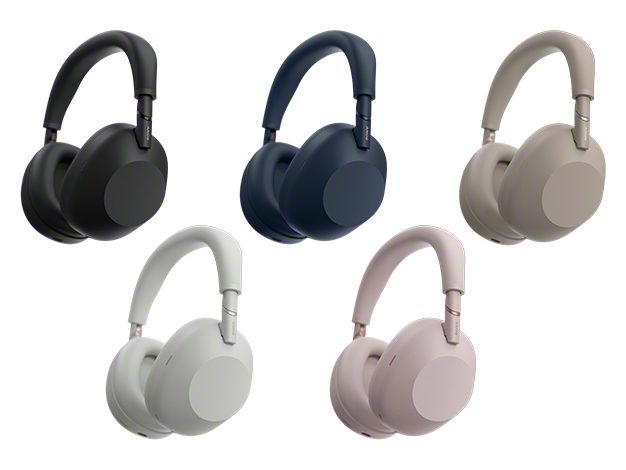
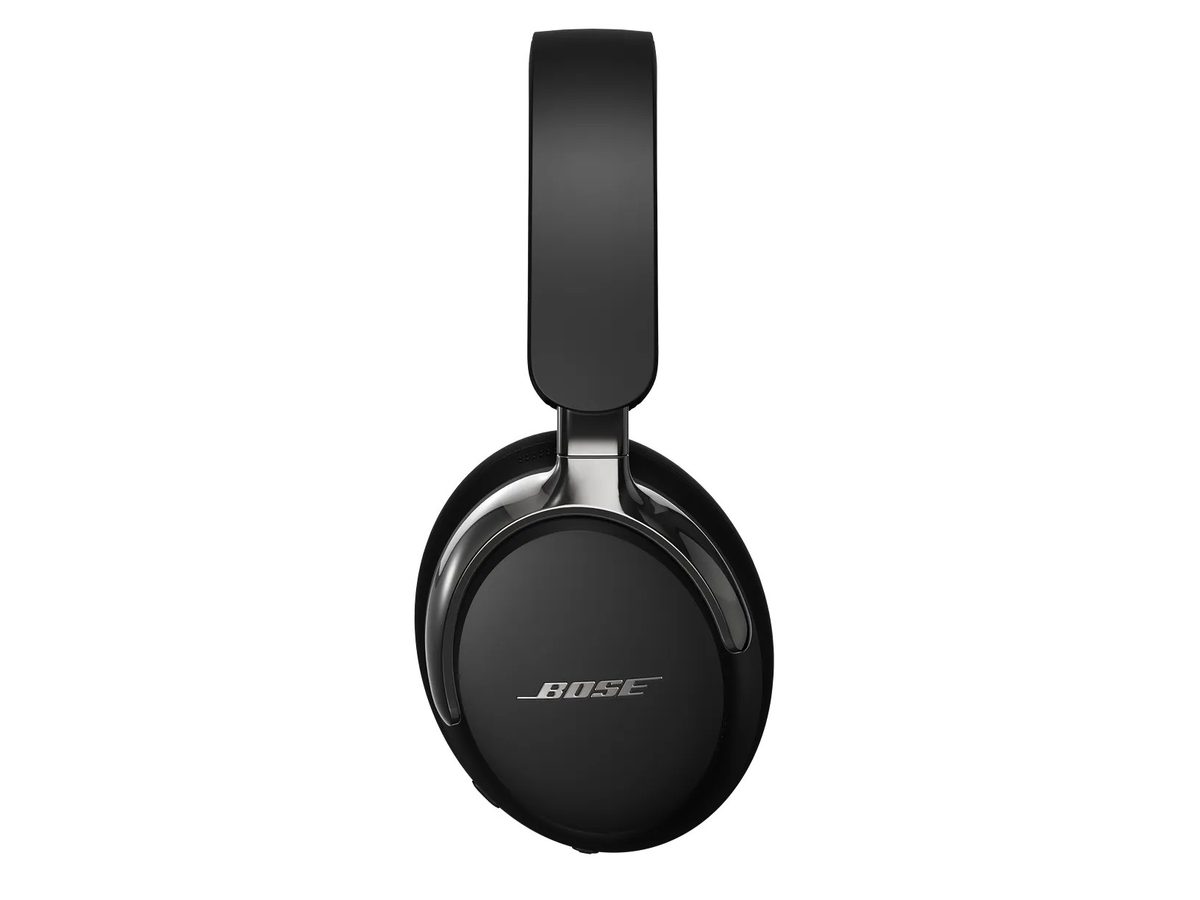
Anyone shopping for serious noise-cancelling headphones in 2026 ends up at the same two pairs: Sony's WH-1000XM6, which launched in May 2025, and Bose's QuietComfort Ultra Headphones (2nd Gen), which followed in September 2025. Neither has been replaced. Sony's only change since launch has been new colors, including a Sandstone finish in May 2026, not a new generation. Both cancel noise at the very top of the category, so the real question is narrower than 'which is better': it is which one fits the way you travel, the phone you own, how much you talk on calls and the shape of your head.
Start with price, because it moves. Bose sells the QC Ultra 2nd Gen for $449 on its own store (checked September 30, 2026). Sony lists the XM6 at around $460, but it has spent much of 2026 below that: on September 4, HotHardware reported it at $398 at Best Buy, Amazon and Sony's own store, after a brief low of $378 earlier in the summer. At typical street prices that is a gap of roughly $50 in Sony's favor. It closes whenever Bose runs a sale, so check both on the day you buy rather than treating either number as fixed.
On noise cancelling, the lab verdicts are close but not identical. RTINGS calls the XM6's full-range noise isolation 'fantastic' and, in its head-to-head, gives Sony a slight edge while describing the two as close. The detail that matters is where the difference sits. RTINGS found that the XM6 improved most over the XM5 in the high bass and mid-range, the band where office chatter, crying children and dentist-drill whine live. For the Bose, RTINGS calls isolation 'remarkable' but notes it does not block office lows quite as strongly. On a plane, where the problem is engine drone, you will struggle to tell them apart. In an open-plan office full of voices, the Sony's advantage is the one you are more likely to notice.
Wind is the exception that flips this. Bose has a dedicated Wind Block feature, and RTINGS found it works better than on the previous model, particularly with low-pitched gusts hitting the ear cup side-on. The XM6 has no dedicated wind reduction, and RTINGS says it doesn't handle wind noise well: turbulence reaching the ANC microphones produces popping. If you mostly wear noise-cancelling headphones walking or cycling outdoors rather than sitting indoors, that is a practical reason to lean Bose, even though Sony leads on paper.
Battery life is where the two best-known labs contradict each other, and it is worth being honest about that rather than picking a side. RTINGS measured the XM6 at 31.75 hours with ANC on and the Bose at 37 hours. SoundGuys ran its own standardized test and got close to the reverse: 37 hours 14 minutes for the Sony and 27 hours 12 minutes for the Bose. Both companies rate their headphones at 30 hours. Bose adds that turning on its Immersive Audio spatial mode drops the figure to 23 hours. Test volume, codec and the content played all shift results, which is why labs differ. The useful takeaway is that either pair covers the longest long-haul flight with room to spare, and neither is a clear battery winner.
Charging and running out behave differently. Sony claims a 3-minute top-up gives about 3 hours of playback, while Bose's claim, as reported by SoundGuys, is roughly 2.5 hours from a 15-minute charge. If you routinely remember to charge only as you leave the house, the Sony's quick top-up is more forgiving. When the battery is completely dead, RTINGS notes the XM6 still works passively over an analog cable, though its sound changes drastically. The Bose can't be used as passive wired headphones at all once the battery is empty, although both work while charging.
The default sound is where most people will actually hear a difference. RTINGS measured the XM6's bass about 5 dB above its target curve, which it rates as 'very emphasized', with treble roughly neutral at -1 dB. The Bose measured about 3 dB of extra bass and treble about 4 dB below target. SoundGuys similarly describes the Bose as having a 3 to 6 dB bass lift over its house curve and sounding 'a little dark'. In practice, the Sony sounds more energetic, with a heavier low end and brighter detail on cymbals and strings. The Bose sounds warmer and more relaxed, which is easier on harsh recordings over a long flight but can feel slightly veiled if you like crisp treble. Both apps have equalizers, so neither default is a life sentence, but most people never change them.
Your phone matters more here than in most headphone comparisons. On an iPhone, both use AAC over Bluetooth, and codec differences disappear. On Android, the Sony supports LDAC for higher-bitrate audio and LC3 over Bluetooth LE Audio, which RTINGS still describes as a beta feature with limited device support. The Bose supports the aptX Adaptive family, including aptX Adaptive Lossless, but only phones with Qualcomm's Snapdragon Sound can use the lossless mode. Everything else drops back to a lower-latency variant. Wired is a clearer split: the Bose accepts digital audio over USB-C, which Bose describes as lossless, as well as a 3.5 mm cable. The XM6 has no USB-C audio at all, only analog. On either pair, the microphone doesn't work while you listen over a cable.
Calls are another place where the labs disagree. RTINGS rates the XM6's microphone system 'very good': voices sound full-bodied and background noise is separated well, though intelligibility suffers in extremely loud environments like an arriving subway train. It rates the Bose microphone 'decent', with natural-sounding speech but background noise that is lowered rather than removed. SoundGuys, however, ran a listener poll on recorded samples from both, and 51% of respondents preferred the Bose against 26% for the Sony. The fair reading is that the Sony handles noisy surroundings better on the measurements, while the Bose's voice character appeals to more listeners in blind comparisons. If calls are a big part of your day, the Sony's head-gesture call answering and dedicated mic-mute shortcut, both noted by RTINGS, are small conveniences that add up.
Comfort is the Bose's strongest argument, and it is a real one. RTINGS calls the QC Ultra 2nd Gen 'amazingly comfortable': light, generously padded and low in clamping force, with ear cups angled to suit different ear shapes. RTINGS also finds the XM6 comfortable, crediting a flatter headband that spreads weight better than the XM5's. But it flags that the Sony's ear cups are shallow, so some people's ears will touch the driver cover or internal microphone mesh. RTINGS explicitly suggests the Bose for anyone who wants deeper cups. SoundGuys lists the XM6 at 254 g. Neither pair has any water-resistance rating, so rain and sweaty workouts are a risk with both.
Portability is a small win for Sony this generation. The XM6 regains folding hinges, which the XM5 dropped, and comes in a case with a magnetic closure, which RTINGS singles out as a convenience when you stow them in a hurry. The Bose also comes with a case and adds a low-power standby when you lay the headphones flat, so you don't lose charge between flights if you forget to switch them off. Both support multipoint Bluetooth, so you can stay connected to a laptop and a phone at the same time.
Beyond the basics, each brand adds its own extras. Bose's Immersive Audio spatializes stereo music and has a Cinema mode for video, at the battery cost mentioned above. Sony leans on processing: the XM6 uses its QN3 noise-cancelling processor, which Sony says is seven times faster than the XM5's chip, and 12 microphones, 1.5 times as many as before. Those are manufacturer claims. The lab results above are what they add up to in practice.
So who should buy which? Buy the Sony WH-1000XM6 if you work or commute somewhere full of voices, want the most energetic default sound, use an Android phone that supports LDAC, want a quick top-up to rescue a forgotten charge, or simply find it at $398 against the Bose at $449. Buy the Bose QuietComfort Ultra (2nd Gen) if comfort over many hours is the priority, particularly if your ears touch the drivers in shallower cups, if you spend a lot of time outside in wind, if you want to plug into USB-C audio on a laptop or plane seat, or if you prefer a warmer, less fatiguing sound. If you are on an iPhone and mostly on planes, you are choosing on comfort and price, because the rest is close enough not to matter.
One caveat applies to both. Noise cancelling and microphone processing on flagship headphones are tuned in firmware, and both companies have changed behavior through updates before. The measurements above come from RTINGS reviews first published in June 2025 (Sony) and October 2025 (Bose) and SoundGuys tests from 2025 and 2026, and prices were checked in September 2026. Try both in a store if you can, because fit changes everything.
| Specs | Sony WH-1000XM6 | Bose QC Ultra Headphones (2nd Gen) |
|---|---|---|
| Price (as reported) | $398 street (HotHardware, Sept 4, 2026); list about $460 | $449 (Bose.com, Sept 30, 2026) |
| Launched | May 2025 | September 2025 |
| Battery, RTINGS test (ANC on) | 31.75 hours | 37 hours |
| Battery, SoundGuys test (ANC on) | 37 h 14 min | 27 h 12 min |
| Rated battery (maker) | 30 hours | 30 hours (23 with Immersive Audio) |
| Quick charge (maker claim) | 3 min for about 3 hours | 15 min for about 2.5 hours |
| Bass / treble vs. RTINGS target | +5 dB / -1 dB | +3 dB / -4 dB |
| Microphone (RTINGS rating) | Very good | Decent |
| Wind noise reduction | None dedicated | Wind Block |
| Bluetooth codecs | SBC, AAC, LDAC, LC3 | SBC, AAC, aptX Adaptive (incl. Lossless) |
| Wired audio | 3.5 mm analog only (works passively) | USB-C digital and 3.5 mm (powered only) |
| Multipoint | Yes | Yes, two devices |
| Water resistance | Not rated | Not rated |
Related devices
Related articles
- AirPods Pro 3 vs. Sony WF-1000XM6: An $80 Price Gap Against More Control Over the Sound
- The Best Noise-Cancelling Headphones Under $200, and Which One Fits You
- Google Pixel 10a vs. Samsung Galaxy A57: The $499 Pixel Outlasts and Outruns, the Samsung Is Bigger and Slimmer
- iPhone 18 Pro vs. Pixel 11 Pro: A Faster Chip and Longer Battery Against a Far Brighter Screen and $100 Off
Sources
- RTINGS: Sony WH-1000XM6 review (published June 18, 2025)
- RTINGS: Bose QuietComfort Ultra Headphones (2nd Gen) review (published October 30, 2025)
- RTINGS: Sony WH-1000XM6 vs Bose QuietComfort Ultra Headphones (2nd Gen)
- SoundGuys: Sony WH-1000XM6 review
- SoundGuys: Bose QuietComfort Ultra Headphones (2nd Gen) review
- SoundGuys: Bose QuietComfort Ultra (2nd Gen) vs Sony WH-1000XM6
- Bose: QuietComfort Ultra Headphones (2nd Gen) product page
- aptX: Bose QuietComfort Ultra Headphones (2nd Gen)
- Sony press release: WH-1000XM6 (PR Newswire, May 2025)
- HotHardware: Sony WH-1000XM6 drop below $400 (September 4, 2026)