AirPods Pro 3 vs AirPods Pro 2: Which Should You Buy? Apple Just Cut the Newer Model's Price Below the Older One's
Both launched at $249. A year later, the math that decides which one to buy has nothing to do with which is newer.
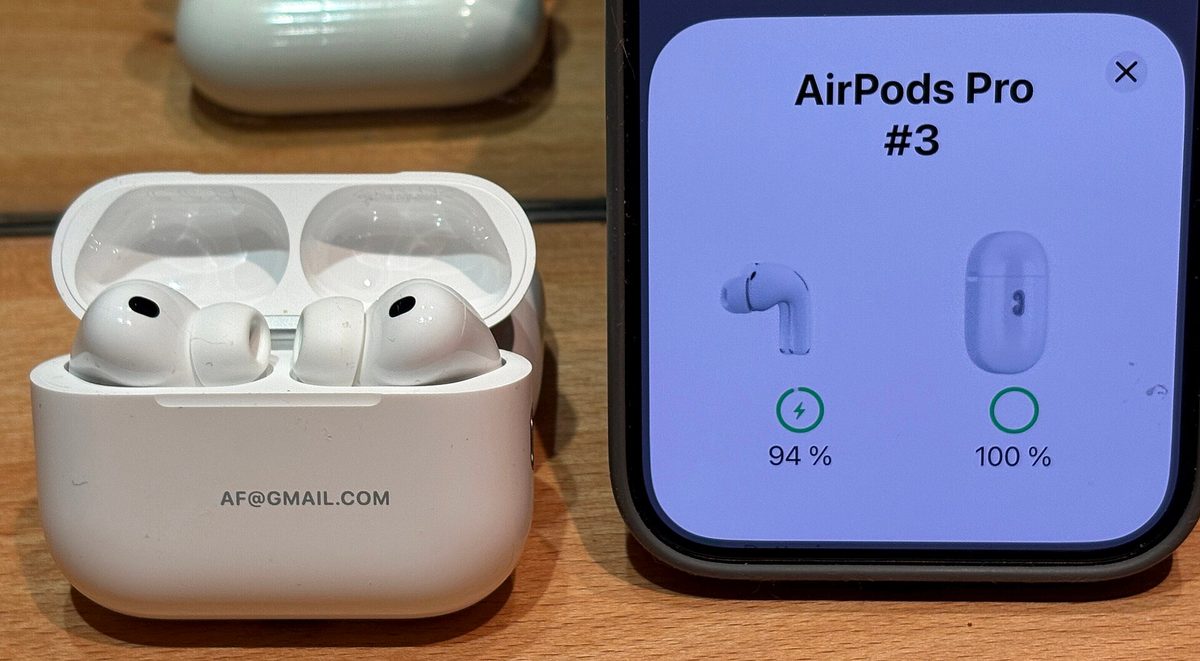
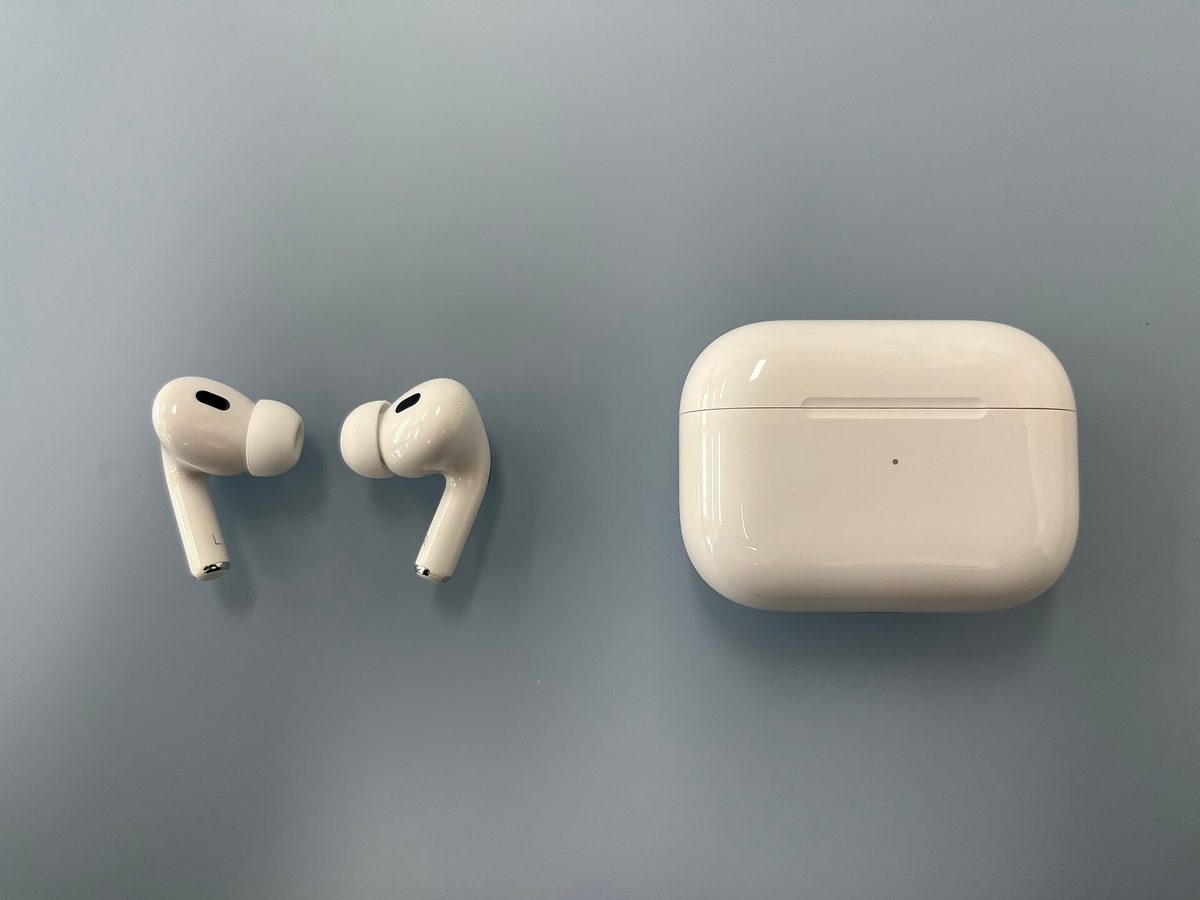
AirPods Pro 3 and AirPods Pro 2 share a price tag, a chip family and a case shape close enough to confuse at a glance. What's changed between them is not a redesign for its own sake: noise cancelling, battery life and fit all moved by measurable amounts, and as of this month the price gap between them has quietly reversed. Here is what actually differs, sourced to the labs that measured it, and who each one actually makes sense for.
Both are Apple's in-ear, stemmed, active-noise-cancelling earbuds, both use the H2 chip Apple introduced with the Pro 2 in 2022, both charge over USB-C, and both rely on Apple's Adaptive EQ rather than a manual equalizer. None of that changed. What did change sits in four places: how much outside noise gets cancelled, how long a single charge lasts, how the earbuds physically sit in your ear, and — as of this week — which one is actually cheaper to buy.
Noise cancelling
SoundGuys measured the Pro 3 reducing outside noise by 90% on average, versus 83% for the Pro 2 — about a 10 dB difference across frequencies, which the outlet notes translates to roughly twice the perceived noise reduction, since human hearing treats every 10 dB as about double the loudness. Apple's own claim is "2x the noise cancelling of AirPods Pro 2," and SoundGuys' lab numbers back that up. In their own words, the Pro 3 delivered "the best noise canceling performance SoundGuys has ever measured in any earbuds," and in practice "made subway commutes feel far more tolerable." The Pro 2's 83% was already strong by 2022 standards — it's just no longer the best Apple sells.
Battery life
This is the single biggest real-world gap. Apple rates the Pro 3 for up to 8 hours of listening with ANC on; SoundGuys' own battery test measured 8 hours 42 minutes. The Pro 2 is rated for up to 6 hours with ANC on, and SoundGuys measured 5 hours 43 minutes — just under 3 hours less per charge than the newer model. SoundGuys called it "a massive jump." The one place the Pro 2 still wins: total time with the case factored in. Apple rates the Pro 2's case for up to 30 hours total, versus "only 24 hours" for the Pro 3 — Apple prioritized a faster-draining but harder-working earbud over maximizing the case's reserve. For most people, the per-charge number matters more than the case total, since it determines how long you can go between pulling the case out of a pocket.
Fit and comfort
Apple shrank the earbud body for the Pro 3 and moved to foam-infused tips in five sizes, up from four silicone-only sizes on the Pro 2, adding a new XXS option. SoundGuys found the smaller bulb "sit[s] deeper in my ear canal for a more stable fit" than the Pro 2's more traditional silicone tips, which "don't provide quite the same seal consistency" — a real factor for ANC performance and all-day wear, since a loose seal undercuts both. The trade-off: the firmer foam-infused tips on the Pro 3 can slip once they pick up sweat, something a few reviewers flagged as a reason some buyers return them. Fit is genuinely individual with in-ear buds, so this is the one category where trying both in person, not just reading a lab number, is worth doing before buying. The case tells a different story than the earbuds: per measurements published by AllThings.How, the Pro 3's case is actually very slightly larger than the Pro 2's in every dimension — 47.2 x 62.2 x 21.8 mm versus 45.2 x 60.6 x 21.7 mm, about 2 mm taller and 1.5 mm wider — but notably lighter at 43.99 g versus 50.75 g, a roughly 13% weight cut. So the earbuds themselves got smaller while the case that holds them got a hair bigger but meaningfully lighter in the pocket.
Sound quality
Apple reworked the Pro 3's acoustic chamber for what SoundGuys describes as improved bass response and more treble extension than the Pro 2. In practice, the outlet is clear that "the sound quality differences are not extremely stark" between the two generations, and some reviewers elsewhere have described the Pro 3's tuning as bolder or more V-shaped against the Pro 2's more neutral balance — which one sounds "better" depends on taste in a way battery life and ANC don't. Neither model offers a manual EQ; both rely on Apple's Adaptive EQ to tune playback to your ear in real time.
Health and extra features
The Pro 3 adds a heart-rate sensor built into the stem, letting it track heart rate during a workout without an Apple Watch — a feature the Pro 2 simply does not have. The Pro 3 also carries Apple's newer U2 chip for Find My precision finding, versus the Pro 2's first-generation U1 chip. Neither difference matters if you don't use Find My's precise-location feature or don't want earbuds tracking your heart rate, but for anyone shopping specifically for a running or gym companion, it's a real reason to lean toward the Pro 3 that has nothing to do with sound at all.
Live Translation isn't actually a Pro 3 exclusive
Apple announced Live Translation alongside the Pro 3, which makes it easy to assume the feature needs the new hardware. It doesn't: per Apple's own support documentation, Live Translation also works on AirPods Pro 2 and AirPods 4 with Active Noise Cancellation, delivered as a software update. What actually gates it is the iPhone, not the earbuds — Apple requires an iPhone 15 Pro or newer running iOS 26, since the translation itself runs through Apple Intelligence on the phone. At launch it covers English, French, German, Portuguese and Spanish, with Italian, Japanese, Korean and Simplified Chinese added in iOS 26.1. If real-time translation is the feature drawing you to the Pro 3 specifically, check your iPhone model first — the earbuds you already own may already support it.
Durability
The Pro 3 carries an IP57 dust, sweat and water resistance rating for both the earbuds and the case, per Apple's own spec page. The Pro 2 is rated IP54 — also dust and water resistant, but to a lower standard; IP57 specifically adds protection against temporary submersion, not just splashes and sweat. Neither model is rated for swimming, but the Pro 3 has more headroom for a workout that gets genuinely sweaty or a walk caught in the rain. IP ratings also degrade with normal wear on both models — Apple's own documentation notes resistance isn't a permanent condition — so neither is a reason to stop treating either pair with some care around water.
Price, as of this week
Both launched at $249. That's no longer where either one actually sells. As of October 6, 2026, MacRumors' pricing tracker lists the Pro 3 discounted to $199 at Amazon and $199.99 at Best Buy, while the Pro 2 showed no listing at Amazon, B&H, Adorama or Best Buy at all — Apple's own store, still at the original $249, was the only place reliably carrying it, and Apple now also sells it there as Certified Refurbished rather than new. A year ago, right after the Pro 3 launched, the Pro 2 was the one getting discounted to as little as $199 at Amazon while supplies lasted. That's flipped: this week, buying the Pro 2 can cost the same as or more than the objectively newer, better-measuring Pro 3 on sale. Prices move constantly on both, so check current listings before buying rather than assuming either number holds.
Who should buy which
Buy the Pro 3 if you want the best noise cancelling Apple has shipped, the longest per-charge battery life, or you specifically want heart-rate tracking during workouts without wearing an Apple Watch — and right now, at $199 on sale, it's also the cheaper of the two at most retailers, which removes the one real argument for buying the older model new. Buy the Pro 2 if you already own a pair and they still work well: a 7-percentage-point gap in ANC and a 3-hour battery difference are both real, but neither is likely to make a working pair of $249 earbuds feel broken. Buy the Pro 2 specifically over the Pro 3 only if you find Apple's silicone tips fit you better than the new foam-infused ones — fit is individual, and the firmer Pro 3 tips have been enough of a problem for some reviewers' ears that it's worth trying both in a store before ordering online, regardless of which one the spec sheet favors.
| Category | AirPods Pro 3 | AirPods Pro 2 (USB-C) |
|---|---|---|
| Launch price | $249 (Sept. 2025) | $249 (2022; USB-C refresh 2023) |
| Street price (MacRumors, Oct. 6, 2026) | $199 (Amazon), $199.99 (Best Buy) | $249 (Apple only; largely unavailable elsewhere) |
| ANC, average noise reduction (SoundGuys) | 90% | 83% |
| Battery, earbuds, ANC on (Apple claim) | Up to 8 hours | Up to 6 hours |
| Battery, earbuds, ANC on (SoundGuys measured) | 8 h 42 min | 5 h 43 min |
| Total battery with case (Apple claim) | Up to 24 hours | Up to 30 hours |
| Water/dust resistance | IP57 (earbuds and case) | IP54 (earbuds and case) |
| Ear tip sizes | 5, foam-infused (incl. new XXS) | 4, silicone |
| Heart-rate sensor | Yes | No |
| Find My chip | U2 | U1 (first-generation) |
| Equalizer | None (Adaptive EQ only) | None (Adaptive EQ only) |
| Bluetooth | 5.3 | 5.3 |
Related devices
Related articles
- AirPods Pro 3 vs Sony WF-1000XM6: Which Should You Buy? An $80 Price Gap Against More Control Over the Sound
- Best Noise-Cancelling Headphones Under $200 (2026) — and Which One Fits You
- Pixel 11 vs Galaxy S26: Which Should You Buy? — The Pixel Has the Brighter Screen and Wireless Charging, the Samsung Is 30 Grams Lighter and Faster
- Galaxy Z Fold8 vs Z Fold7: What's the Difference? The Newer One Is $100 Cheaper, 14 Grams Lighter, and Drops the Telephoto Lens Entirely
Sources
- SoundGuys — Apple AirPods Pro 3 vs. AirPods Pro 2: Should you upgrade?
- SoundGuys — The AirPods Pro 3 have the best noise canceling of any earbuds
- SoundGuys — Apple AirPods Pro 2 review
- Apple Support — AirPods Pro 2 (USB-C) Tech Specs
- 9to5Mac — AirPods Pro 3 vs AirPods Pro 2: Here's everything new
- 9to5Mac — The new AirPods Live Translation feature also works with AirPods Pro 2 and AirPods 4
- MacRumors — AirPods Deals (updated October 6, 2026)
- AllThings.How — AirPods Pro 3 case size and weight, compared to previous AirPods