AirPods Pro 3 vs. Sony WF-1000XM6: An $80 Price Gap Against More Control Over the Sound
Apple's earbuds are cheaper, better sealed against water and sweat, and packed with iPhone features; Sony's last longer per charge in SoundGuys' tests and add codecs, an equalizer and multipoint. The noise-cancelling gap is small either way.
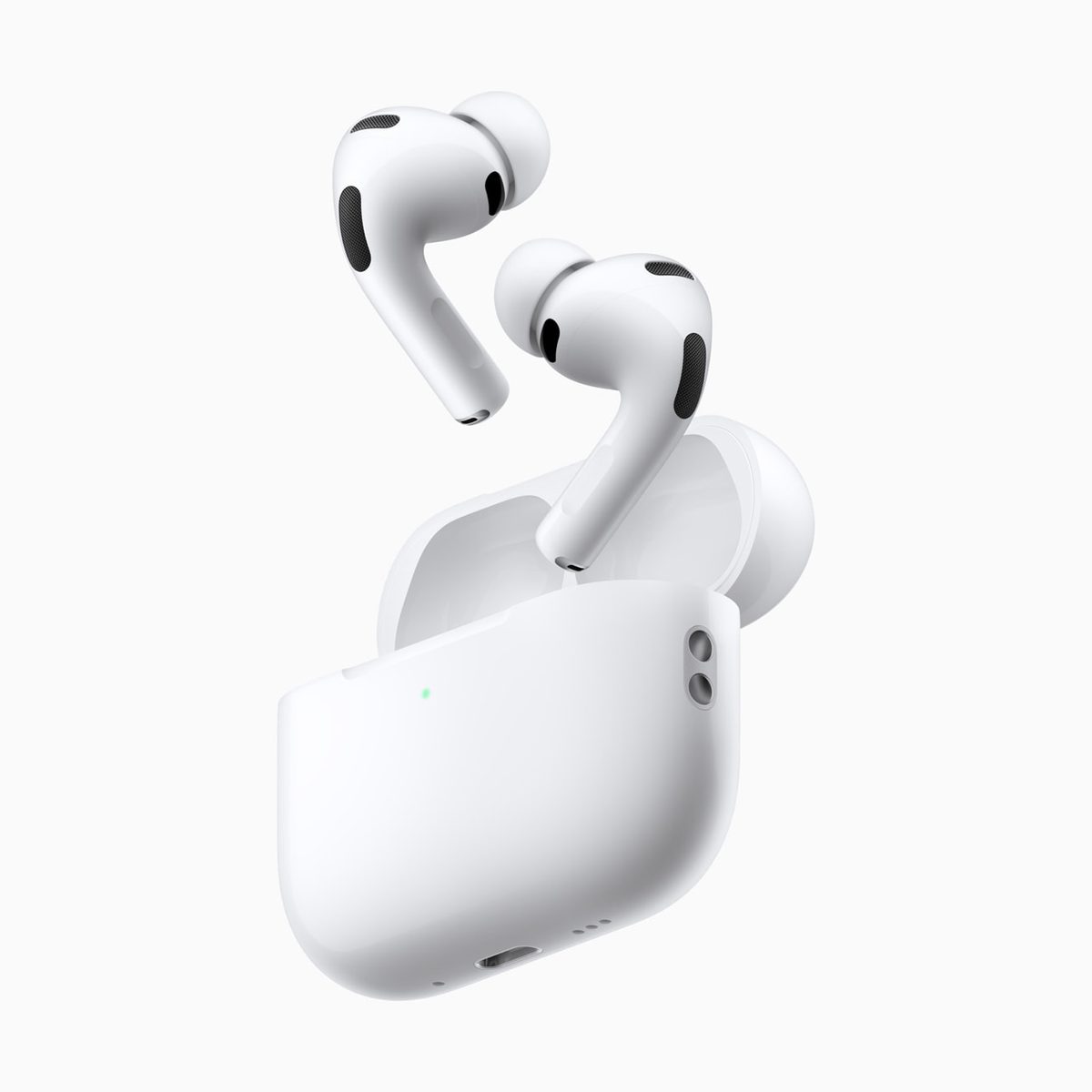
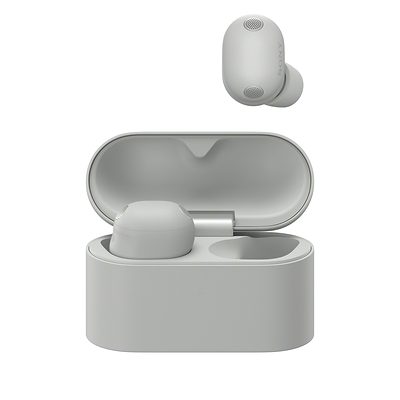
These are the two flagship in-ear earbuds most iPhone and Android owners will end up comparing this year, and they pull in different directions. The AirPods Pro 3 cost $249. Sony's WF-1000XM6, launched in February 2026, list at $329.99, about $80 more, according to SoundGuys' comparison from that month; MacRumors' April comparison rounds the Sony to $330. Everything below is drawn from Apple's own specifications page and from those two published comparisons, with each measurement credited to whoever made it. We have not run our own lab tests on either pair.
Start with the number most buyers care about: noise cancelling. The two outlets do not agree on a winner, which is itself useful information. SoundGuys measured an average loudness reduction of 90 percent for the AirPods Pro 3 and 88 percent for the WF-1000XM6, putting Apple slightly ahead. MacRumors says in its comparison that Sony's noise cancelling performs "just a bit better" at both low and high frequencies. A two-point gap in a lab measurement and a comparison write-up that leans the other way add up to the same practical conclusion: on a train, a plane or a busy street, both do the job at a level where the difference is unlikely to decide the purchase.
Transparency mode, which lets outside sound in, is where the published impressions are clearest. MacRumors calls Apple's version more natural and describes Sony's as sounding more robotic. If you take calls in the street, talk to a barista with the earbuds in, or simply hate the enclosed feeling of noise cancelling, that favors the AirPods Pro 3.
Battery life looks like a tie on paper and is not quite one in measurement. Both companies quote up to 8 hours with noise cancelling on and about 24 hours in total with the charging case, and MacRumors lists the same figures for both. In SoundGuys' testing with noise cancelling enabled, the Sony lasted 9 hours 41 minutes and the AirPods Pro 3 lasted 8 hours 42 minutes, roughly an hour more for Sony from one charge. That extra hour is the difference between covering a long-haul flight on the earbuds alone and reaching for the case. For quick top-ups, Apple says 5 minutes in the case gives about an hour of listening; Sony claims 3 minutes gives 60 minutes, though SoundGuys measured about 45 minutes with noise cancelling on.
Sound is where Sony's approach is most different. SoundGuys found the WF-1000XM6 leans toward a bass lift between roughly 20 and 200 Hz with a treble emphasis around 6 kHz with noise cancelling on, and a more neutral balance with it off. The AirPods Pro 3 have stronger low-end bass and elevated upper mids and highs, and SoundGuys notes their tuning changes with listening volume. On SoundGuys' MDAQS quality model, the Sony scored 4.9 for timbre, 3.7 for distortion, 4.5 for immersiveness and 4.8 overall; the AirPods Pro 3 scored lower overall and on timbre and distortion but higher on immersiveness. In plain terms: the Sony is the more accurate-sounding pair, and the AirPods sound bigger and more enveloping.
The bigger practical difference is how much you can change. The Sony has a 10-band equalizer (plus or minus 6 dB per band) in its Sound Connect app, selectable latency modes trading sound quality against connection stability, and multipoint, which SoundGuys says lets you move between a phone and a laptop without noticeable lag. The AirPods Pro 3 have no equalizer at all; MacRumors describes their tuning as well balanced and leaves it there. If you like to shape your sound, or you listen on a phone that supports LDAC, that decides it.
Codecs matter mostly on Android. The Sony supports SBC, AAC, LDAC and LC3, plus Bluetooth LE Audio and Auracast. The AirPods Pro 3 support SBC and AAC only. Both use Bluetooth 5.3. On an iPhone the codec gap is invisible, because iPhones do not use LDAC anyway. On a recent Android phone, LDAC is what lets the Sony deliver higher-bitrate audio over Bluetooth.
Fit and comfort are personal, but the reported differences are concrete. SoundGuys describes the WF-1000XM6 as among Sony's chunkiest earbuds yet, with a matte, pill-shaped profile and memory-foam tips; the shape helps them seat properly even when put in quickly. The AirPods Pro 3 are smaller and sit deeper in the ear with foam-infused tips, though SoundGuys warns that the glossy shell can slip as sweat builds up. Durability points the same way: Apple rates the AirPods Pro 3 IP57 for dust and water, while the Sony carries only IPX4, which covers splashes rather than immersion.
Calls and microphones are close. Sony's system combines beamforming microphones, an improved bone-conduction sensor and AI noise rejection; Apple's uses upgraded low-noise microphones, an improved acoustic seal and adaptive processing. In a SoundGuys reader poll on the microphone samples, 59 percent preferred Apple's and 41 percent preferred Sony's, which is a preference rather than a verdict.
Then there are the features only one side has. Apple's page lists Adaptive Audio, Conversation Awareness, Voice Isolation, a hearing test and hearing-aid features, and heart-rate sensing during workouts, with up to 6.5 hours of listening on a single charge when heart-rate sensing is used. Charging works with MagSafe, an Apple Watch charger, any Qi charger or USB-C. Sony has none of the health features. The catch is on the Android side: SoundGuys says the AirPods Pro 3 are very limited without an Apple device, essentially basic audio playback with no customization, extra features or firmware updates.
So who should buy which? If you own an iPhone and mostly want earbuds that just work, the AirPods Pro 3 are the stronger buy: they cost about $80 less, they resist water and sweat far better, they have the more natural transparency mode, and every feature they advertise works. MacRumors reaches the same conclusion for Apple owners. If you use Android, switch between a phone and a laptop, want an equalizer, or need the extra hour of battery, the WF-1000XM6 make more sense, and SoundGuys frames the decision the same way: Sony for people who want control over the sound and use more than one platform, Apple for iPhone users who value convenience and spatial audio over tuning. Prices are the list prices reported in February and April 2026; check the current price before you buy, since earbuds are discounted often.
| Category | Apple AirPods Pro 3 | Sony WF-1000XM6 |
|---|---|---|
| List price (USD) | $249 | $329.99 |
| Battery, earbuds, ANC on (maker claim) | Up to 8 hours | Up to 8 hours |
| Battery, earbuds, ANC on (SoundGuys measured) | 8 h 42 min | 9 h 41 min |
| Total with case (maker claim) | Up to 24 hours | About 24 hours |
| Noise cancelling (SoundGuys, average loudness reduction) | 90% | 88% |
| Water and dust resistance | IP57 | IPX4 |
| Bluetooth and codecs | 5.3; SBC, AAC | 5.3; SBC, AAC, LDAC, LC3, LE Audio, Auracast |
| Equalizer | None | 10-band, +/-6 dB, Sound Connect app |
| Multipoint | Not listed by SoundGuys | Yes |
| Heart-rate sensing / hearing-aid features | Yes | No |
| Full features on Android | No, basic playback only (SoundGuys) | Yes |
Related devices
Related articles
- Google Pixel 10a vs. Samsung Galaxy A57: The $499 Pixel Outlasts and Outruns, the Samsung Is Bigger and Slimmer
- Sony WH-1000XM6 vs. Bose QuietComfort Ultra (2nd Gen): Two Labs Disagree on Battery, and Comfort Decides the Rest
- iPhone 18 Pro vs. Pixel 11 Pro: A Faster Chip and Longer Battery Against a Far Brighter Screen and $100 Off
- iPhone 17 vs. Galaxy S26: $100 Apart, and Closer Than the Spec Sheets Suggest